OP/ED: Trump tariffs aren’t B.C. forestry’s biggest problem
B.C. forestry struggles stem from domestic issues like fiber access and rising costs, not just Trump's tariffs, as industry giants plan relocations.
3 min read
By Jock Finlayson, ICBA Chief Economist
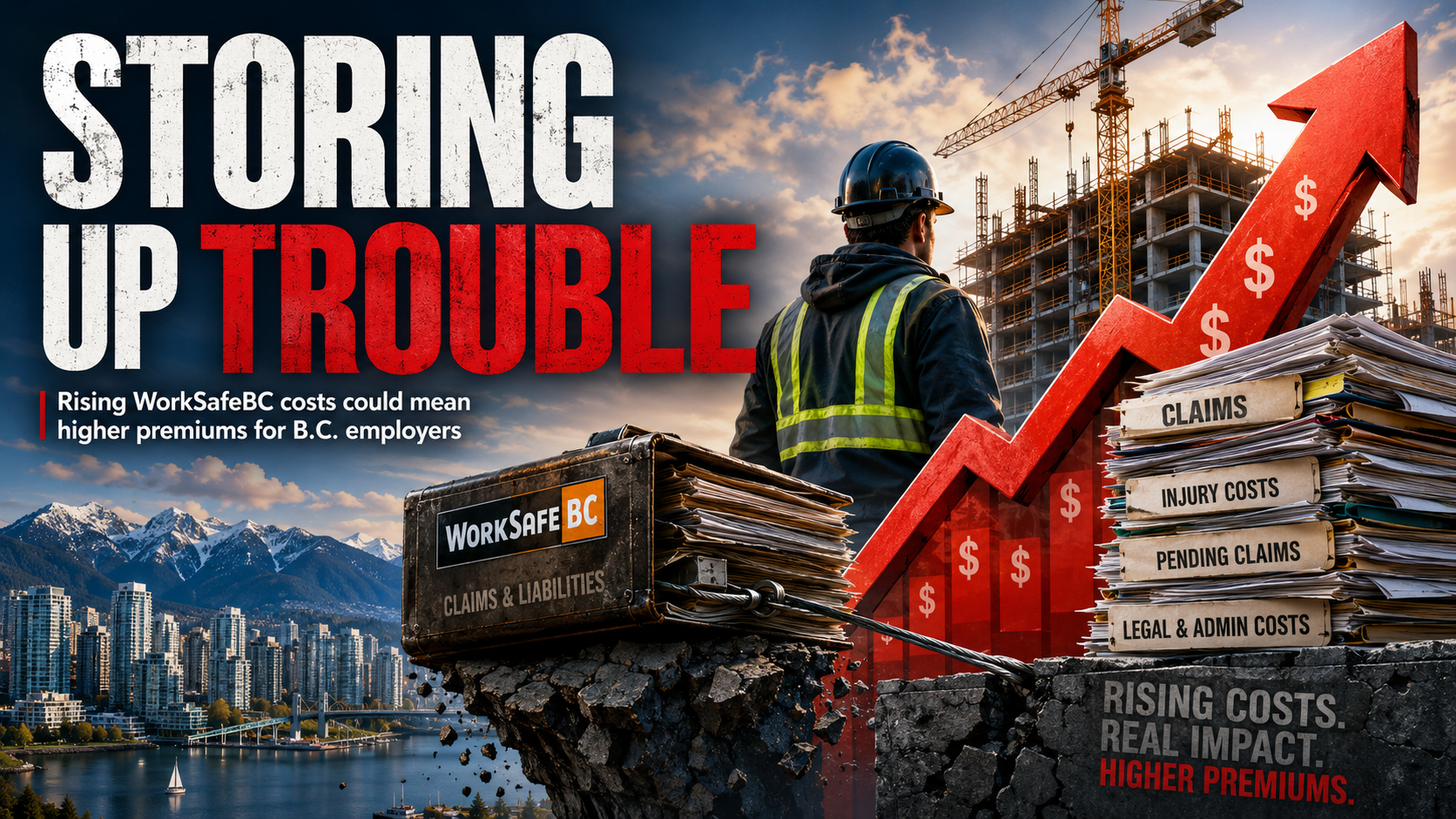
WorkSafeBC is the province’s occupational health and safety regulator as well as the main provider of compensation and other benefits to workers injured on the job. It is one of the most important government entities in the province. WorkSafe’s premiums and its decisions on workplace health and safety requirements have a significant impact on overall labour costs for B.C. employers – including those in the construction industry. Every premium dollar collected by the agency is paid by employers, based on their industry classification and specific claims experience. Employees do not pay into the WorkSafe system, in contrast to the federal Employment Insurance program.
In 2025, WorkSafe collected $2.4 billion in premiums from B.C. employers. This was equivalent to almost one-third of the income taxes that B.C. businesses contributed to the provincial government’s coffers in 2024-25.
For a long period, WorkSafe has been in a strong financial position. Average premiums paid by B.C. employers have been stable – held at $1.55 per $100 of assessable payroll for nine years through 2026. While the cost of operating the system has climbed over time, upward pressure on premiums has been mitigated because of solid earnings on WorkSafe’s multi-billion-dollar investment portfolio, the maintenance of a healthy “funding ratio” (see below), and fewer workplace injuries in some industry sectors.
Funding level and the outlook for premiums
In managing its sizable balance sheet, WorkSafe aims for a healthy “funding level” – the value of assets vs liabilities. In recent years, it has targeted a minimum funding level of 130%. At the end of 2025, the funding level stood at 139%, down from 141% in 2024. Last year marked the first time since 2016 that it fell below 140%.
A funding level above 130% gives the agency room to return “surplus” funds to employers, by levying premiums that are lower than what otherwise would be required to finance the system. From 2018 to 2026, WorkSafe estimates that a cumulative $3.2 billion was notionally “returned” to employers by way of premiums set below the rates necessary to run the system in the absence of the surplus. See Figure 1.
Figure 1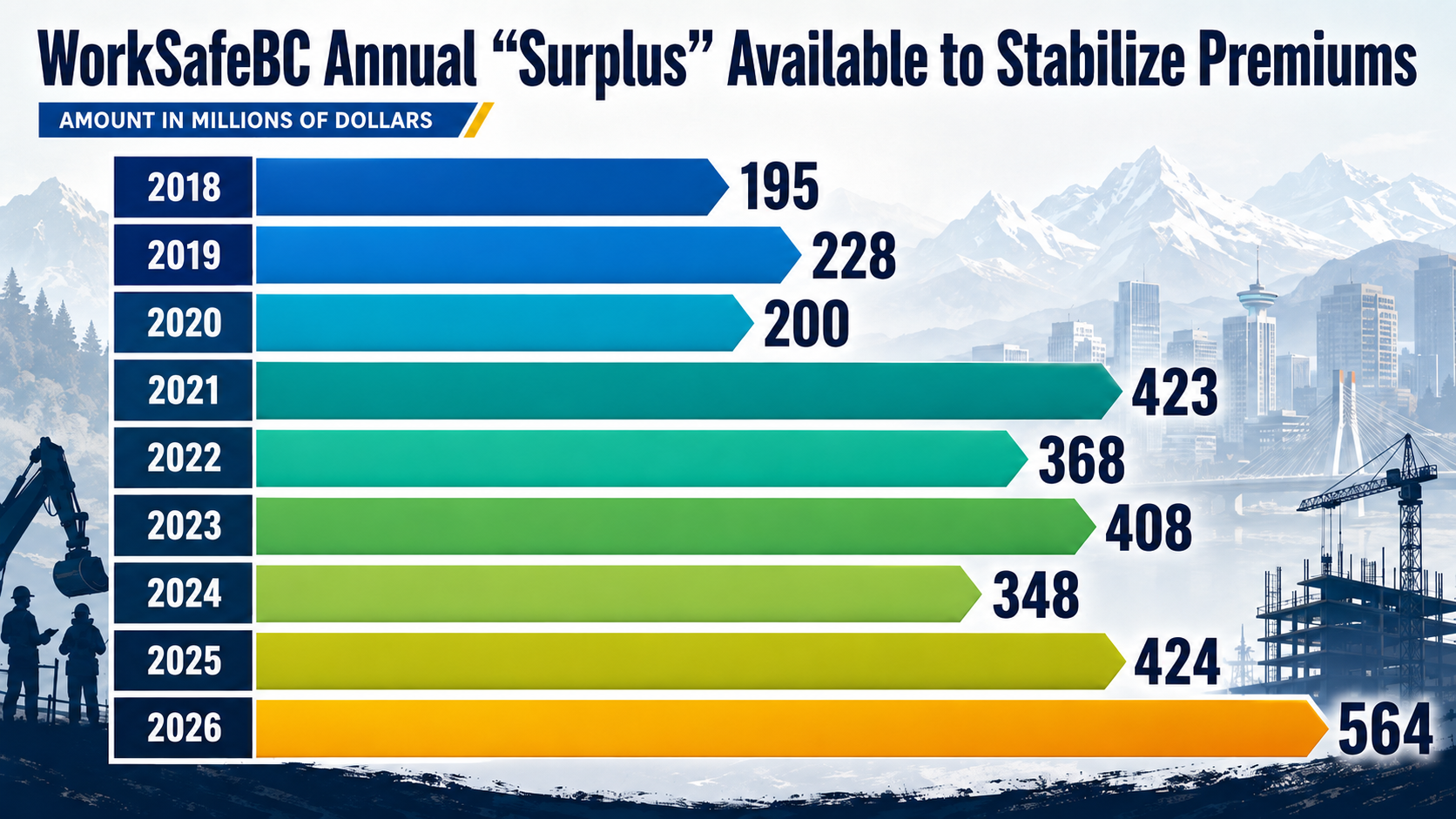
As of mid-2026, WorkSafeBC looks to have arrived at a financial tipping point. The funding level is likely to keep declining, year-by-year, over the next half decade and beyond, as cost pressures intensify. This means a shrinking financial cushion at WorkSafeBC. ICBA Economics believes this trend will persist, as the cost, variety, and complexity of injury claims continue to increase and as WorkSafe’s Board of Directors reportedly considers further enhancing the range of benefits provided to workers lodging injury claims. Under our baseline scenario, B.C. employers can look forward to serial and significant premium hikes – possibly starting as soon as 2027, but in our view all but inevitable over the next few years.
WorkSafeBC management acknowledges sustained upward claims-cost pressures. Important reasons for this include more generous benefits for injured workers and expanded coverage for “mental health” claims and soft tissue-related injuries. A steadily rising fraction of total claims costs is linked to cases involving chronic pain and psychological distress. Even though it is often unclear to what extent such problems originate in the workplace, WorkSafe routinely approves these types of claims, with limited due diligence to determine the actual cause. The agency reports that 14% of all injury claims now involve chronic pain and psychological distress, compared to 10% of claims in 2019. Many of these claims are long-duration; a growing number lead to findings of permanent disability. This has become a major cost driver within the system.
In 2024, total WorkSafeBC claims costs – excluding related administrative costs – were $3.2 billion, up almost $260 million from 2023. Last year, the figure jumped to $3.6 billion, almost $400 million more than the year before – and roughly $650 million higher than in 2023. Stated differently, claims costs soared by 22% between 2023 and 2025. ICBA Economics projects that claims costs will keep growing rapidly in the coming years.
All of this is deeply concerning to ICBA and others in the business community. Given the likelihood that future returns on WorkSafe’s investment portfolio will be lower than realized returns over the previous 15 years, the marked upward trajectory of claims costs is even more alarming. This is so because strong investment returns, historically, have helped to keep a lid on WorkSafe premiums. Last year, WorkSafe reported a 7.5% “fair value” return on its investment portfolio. With North American equity markets hovering near all-time highs, bond yields inching higher, and a very unsettled global economy, there is no guarantee that future returns will match this result. Indeed, a few years of materially lower investment returns would not be surprising.
Time to shift gears
As of mid-2026, B.C.’s economy is struggling to grow, much of the small business community is mired in recession, and large parts of the construction industry are facing the worst business conditions in decades. For policymakers in Victoria, the priority now is not to pile on additional costs and new regulations that aggravate the economic and financial difficulties confronting business and industry. Instead, the time has come for the provincial government and those leading its agencies and Crown Corporations to pivot, by directing their attention to containing costs, improving the operating environment for business, and making British Columbia a more attractive location for companies and entrepreneurs to invest, grow and innovate.
In the context of WorkSafeBC, this calls for a clear, public commitment by senior management and the Board of Directors to 1) better understand and manage the drivers of skyrocketing claims costs; and 2) steer clear of additional regulatory changes – such as the proposed psychological health and safety regulation – that are sure to worsen the negative financial trends already evident in the system.
Note: This blog draws on WorkSafeBC’s 2025 Annual Report and the agency’s 2026-2028 Service Plan. For more on ICBA’s advocacy with WorkSafeBC, check out this op-ed dissecting rising costs, this op-ed on the vanishing surplus, and this piece on the dissolution of WorkSafe’s fraud investigation unit.
B.C. forestry struggles stem from domestic issues like fiber access and rising costs, not just Trump's tariffs, as industry giants plan relocations.
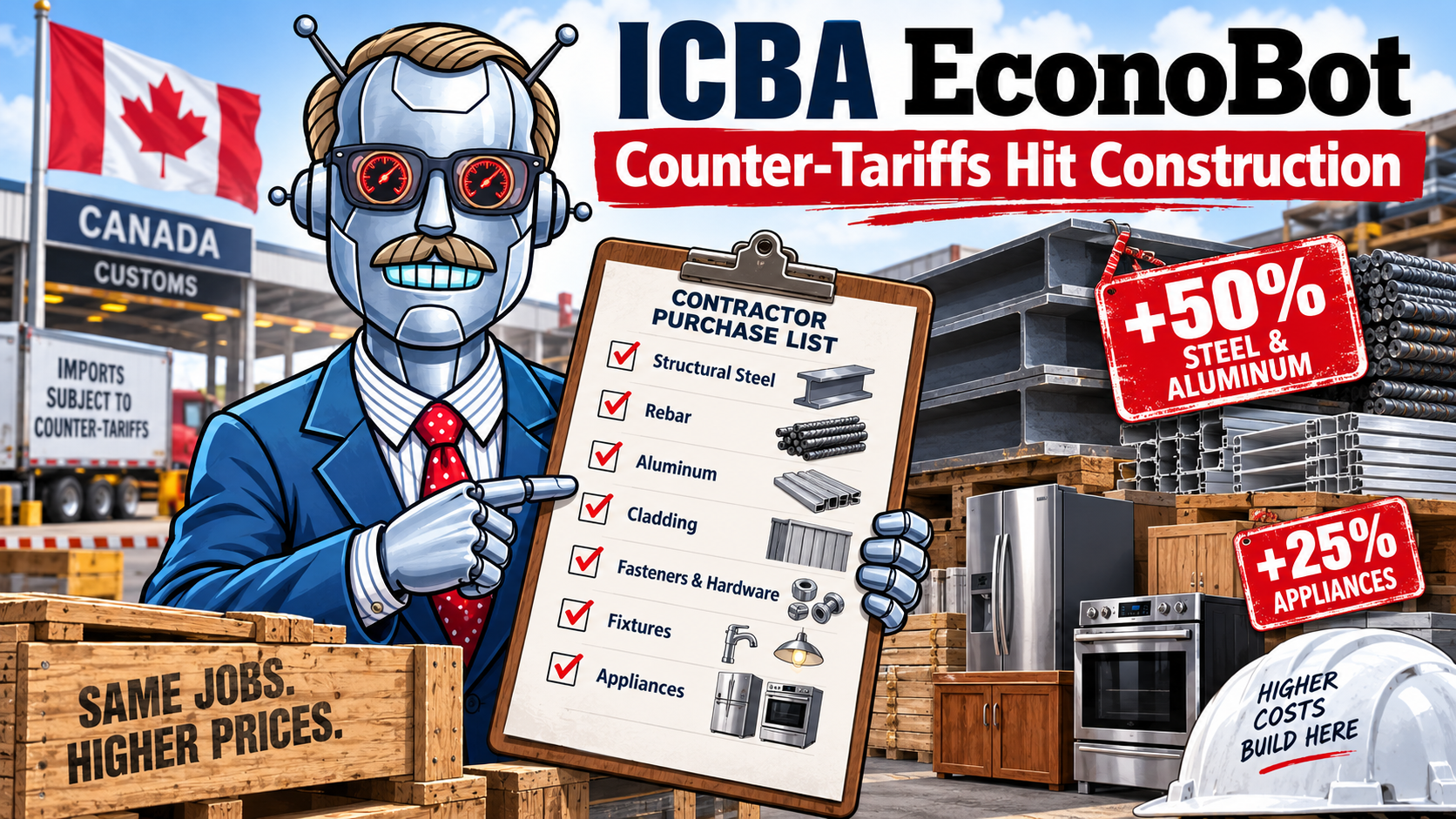
Canada's new counter-tariffs on U.S. imports impact construction costs, raising prices for builders and homebuyers. Explore the economic implications...
Canada's new retaliatory tariffs are impacting the construction industry. Explore how these measures affect costs and the call for exemptions in the...