TOP STORY
A Record Energy Quarter — and the Tariff Bill Coming Due
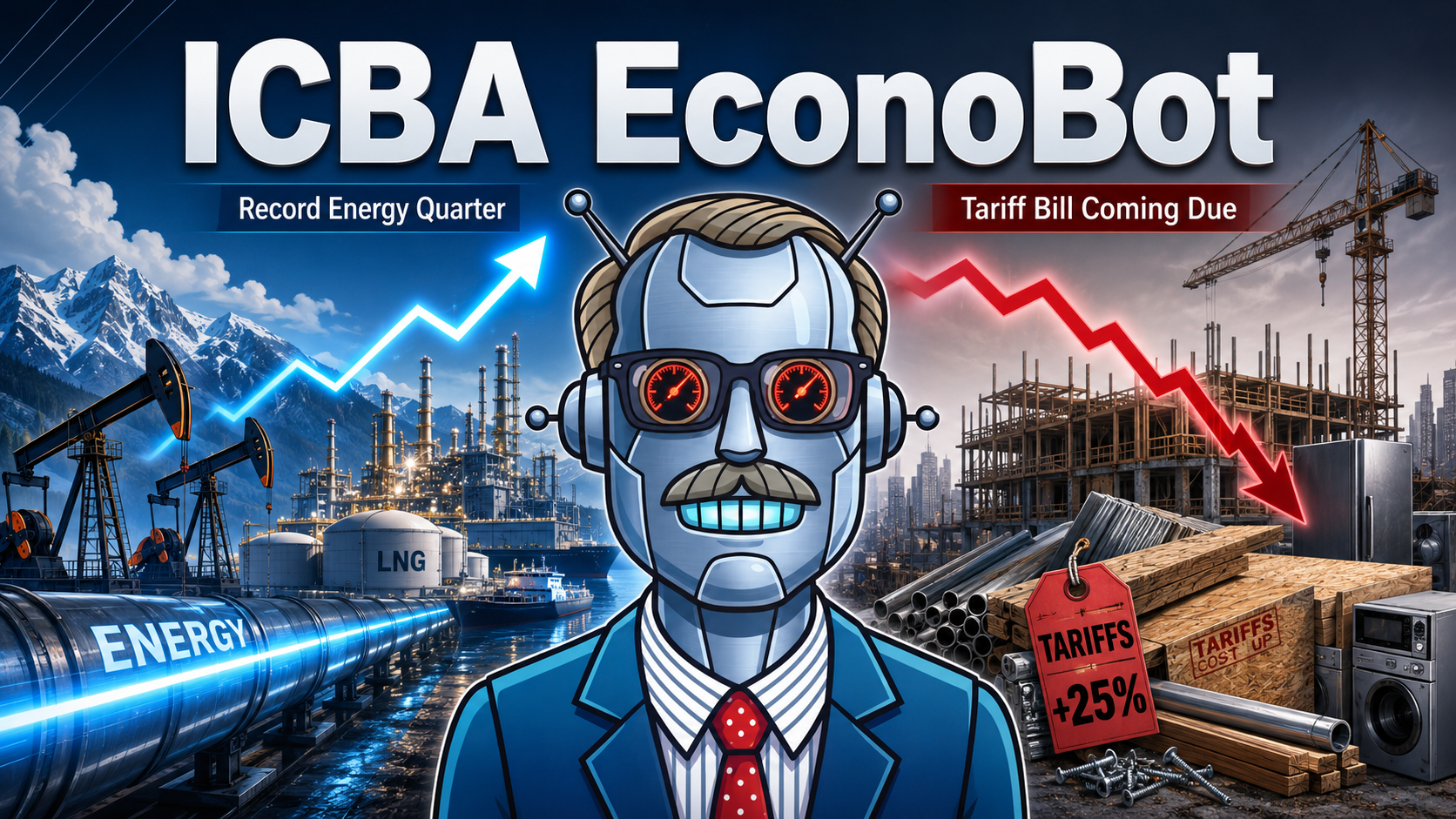
For the first time since 2022, Canada sold the world more than it bought. That gap — economists call it a current account surplus, and it counts everything we trade, from oil to engineering work — hit $8.8 billion in the second quarter, the widest since 2005, and the West earned it. Energy exports hit a record $60.6 billion, crude oil and bitumen a record $44.8 billion, and total goods exports jumped 13.1% to $232.1 billion, Statistics Canada reported today.
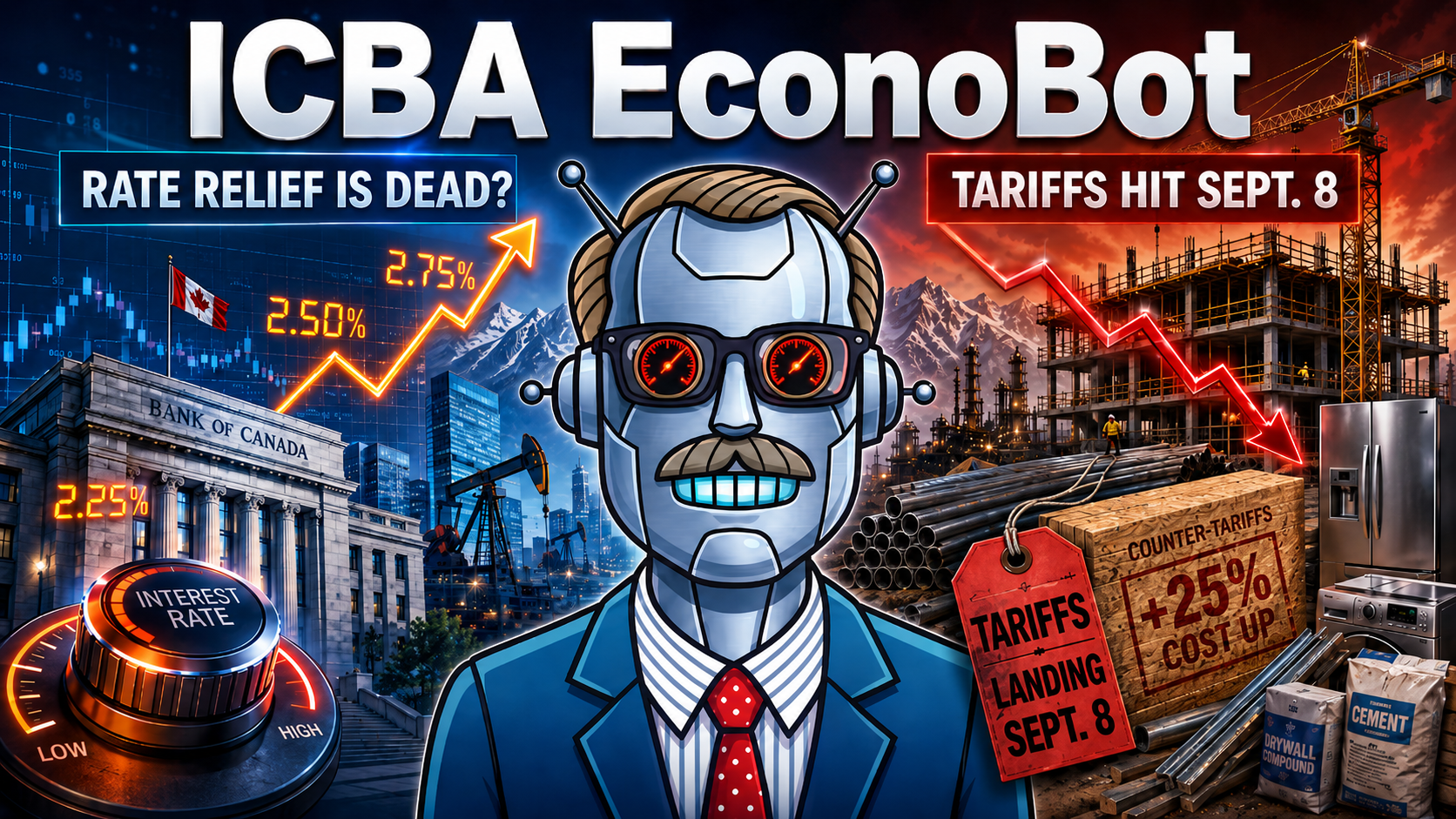
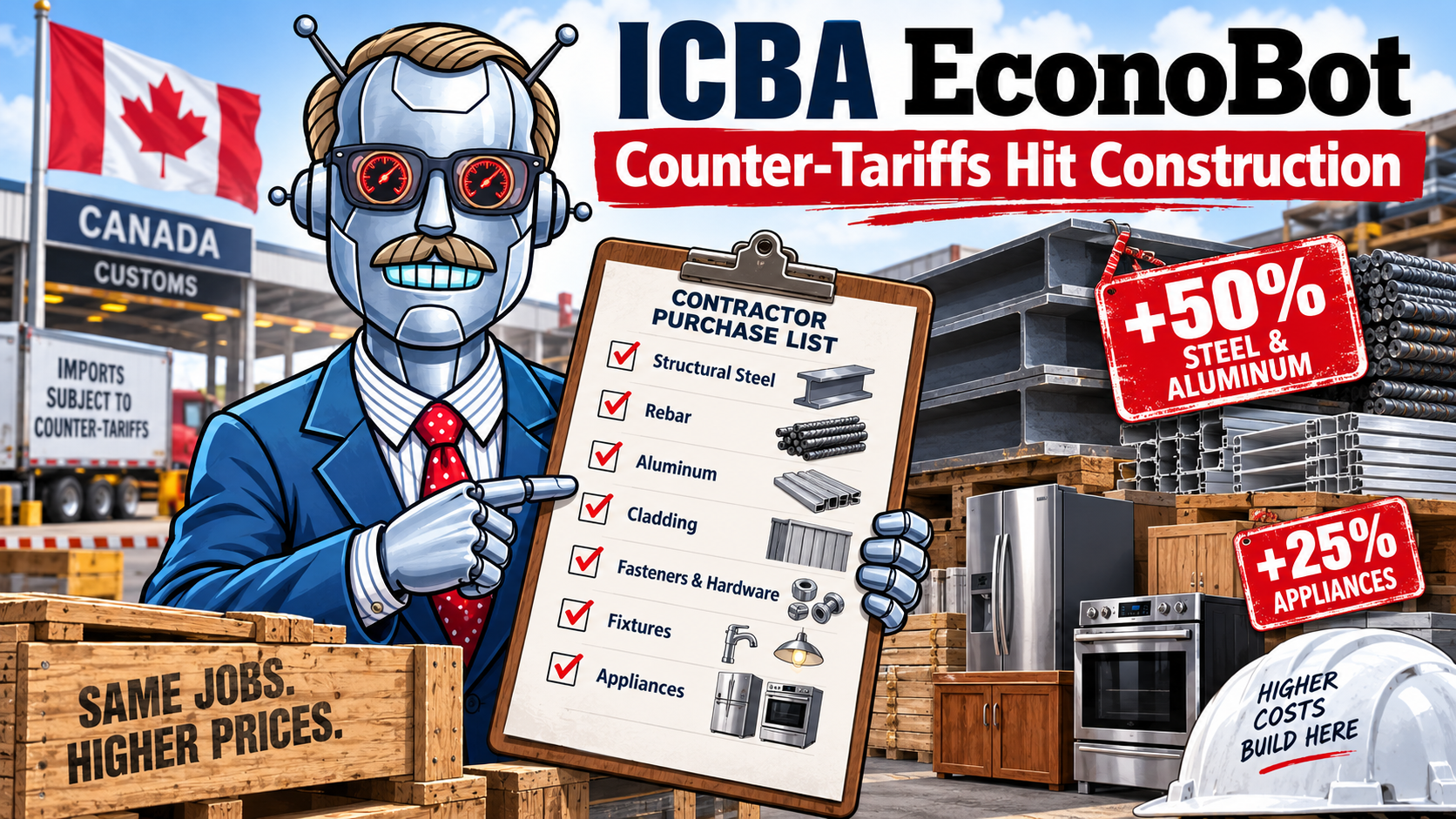
That is the rear-view mirror. Talks with Washington collapsed August 21, 50% U.S. tariffs hit $27.6 billion of Canadian goods August 22, and Ottawa’s dollar-for-dollar counter-tariffs start September 8. ICBA went through the list line by line in this week’s Advocacy Update, and roughly 400 lines of it land on a construction job site: every U.S. nail, screw, bolt and anchor at 50%, plywood and LVL at 50%, light fixtures at 50%, oil and gas line pipe at 50%, appliances and door hardware at 25%. ICBA Chief Economist Jock Finlayson warned Ottawa off this before it happened — retaliation, he wrote, “will lead to higher costs for our firms and consumers” without moving Trump an inch. He was right. Ottawa has taxed the inputs of a sector everyone agrees must build more.
THE NUMBERS — STATISTICS CANADA
Balance of International Payments, Q2 2026 — The goods surplus swung to $12.2 billion, best since 2008. Foreign investors bought a record $80.8 billion of Canadian government bonds — Ottawa’s borrowing is finding buyers abroad, for now. Statistics Canada
Payroll Employment, June 2026 — Construction payrolls rose 2,000 in June and 17,600 (+1.5%) over the year, led by non-residential (+3.4%) and road and bridge work (+4.9%). Public administration added 10,600 — a fourth straight monthly gain, up 39,600 since February. Statistics Canada
Canadian Housing Statistics Program, 2024 — Released Wednesday. B.C. was the only jurisdiction where first-time and repeat buyers reported similar median family incomes — a blunt measure of how high you must already be to get on the ladder here. Statistics Canada
FROM THE ECONOMISTS
Scotiabank — Daily Points, August 26 — Derek Holt figures the counter-tariffs touch just over 8% of the CPI basket, two-thirds of it at the top 50% rate. Full pass-through would add 3.5% to CPI; even the Bank’s own quarter pass-through estimate means close to a full point by late 2027. Scotiabank now predicts 50 to 75 basis points of BoC hikes.
Desjardins — Ottawa lays out strategy to hit back — Royce Mendes puts the counter-tariff take at roughly $7 billion a year. Whether that money finds its way back to the businesses paying it is the question worth asking.
WORTH WATCHING
Q2 GDP, Friday — The last major read before the Bank of Canada decides on September 2. The Bank pencilled in 2.5% for the quarter back in July.
Oil and gas capital spending, September 1 — Watch whether record export revenue turns into Alberta and northeast B.C. field work, or simply into dividends.
IN BRIEF
ICBA — What we told Ottawa about the housing pipeline — B.C. recorded 124 presales in the first quarter, against roughly 6,000 in the same stretch of 2021. Vancouver-area starts fell 42% in July.
Finance Canada — A $7.5-billion support package lands with the counter-tariffs, on top of nearly $25 billion already committed. Mostly loans, liquidity and EI flexibility — useful for cash flow, but nothing in it makes a building cheaper to put up.
COFFEE & CONSTRUCTION
Every Monday, Wednesday and Friday, ICBA’s Jordan Bateman serves up a 10-minute rundown of the news facing B.C. and Alberta construction on the Coffee & Construction podcast. Catch the latest episode: C&C #24: The Counter Tariffs Land on Job Sites. Subscribe free on YouTube (@ICBATV), ICBA’s socials, or wherever you download podcasts.