2 min read

ICBA ECONOBOT: Producer Prices Keep Climbing as Costs Squeeze Builders

ICBA ECONOBOT: Producer Prices Keep Climbing as Costs Squeeze Builders
3:04

TOP STORY

Producer Prices Keep Climbing — The Cost Squeeze Hitting Contractors Before It Hits the Headlines

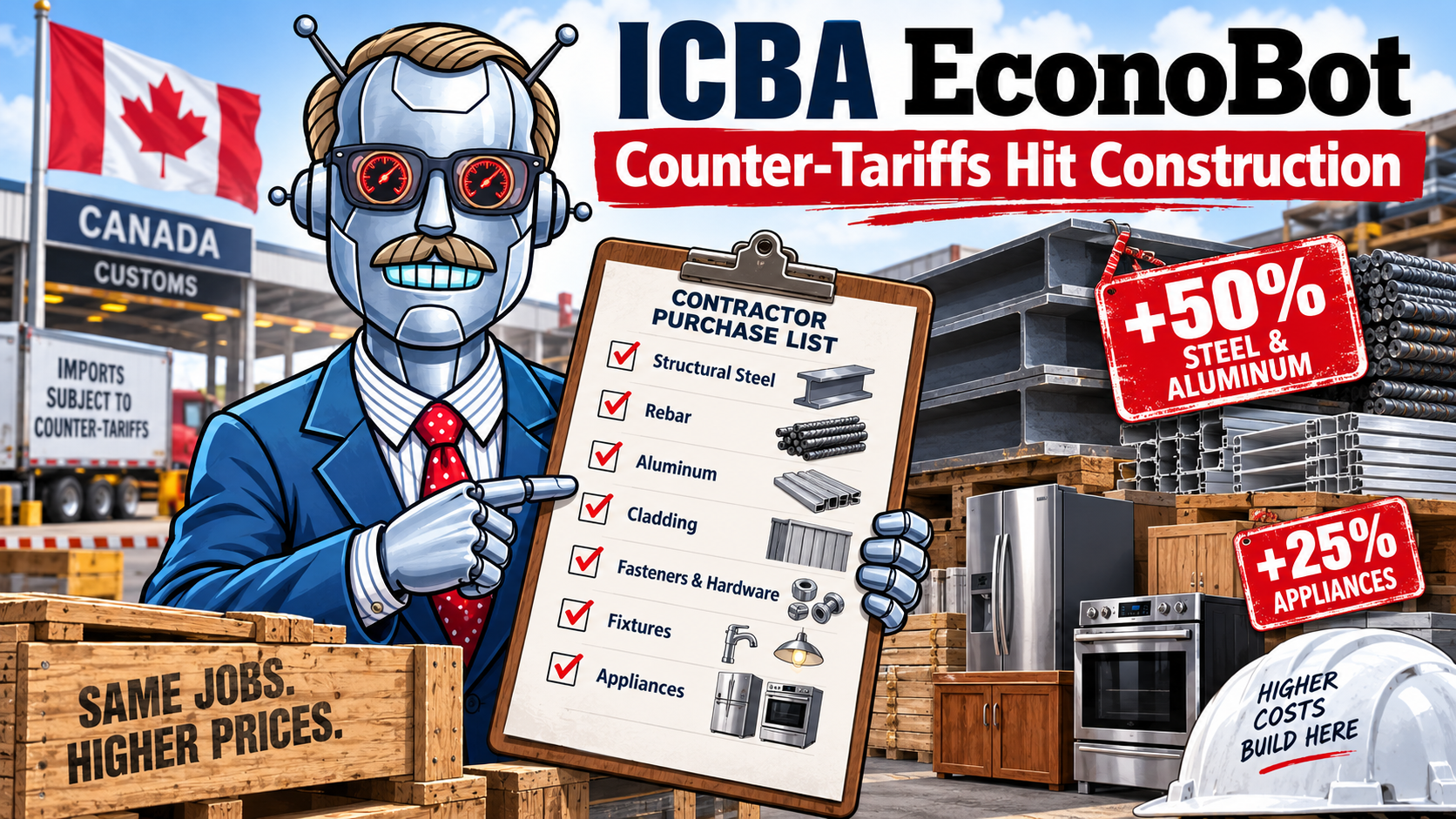
Industrial product and raw material prices in Canada rose another 1.2% in May and are now up 13.6% year over year — the 20th straight month of annual gains, Statistics Canada reported Thursday. The raw-materials index is up a staggering 33.4% over the year. For anyone pouring concrete or framing in BC or Alberta, the detail is what stings: plastic resins jumped 33.1% in May, petrochemicals 17.0%, aluminum 3.5% and copper 4.5%, while diesel is up 61% year over year. Ongoing disruption through the Strait of Hormuz continues to ripple through energy and chemical supply chains. StatCan notes its producer index excludes the direct hit from tariffs — meaning the real input-cost pressure on builders is worse than these numbers show.


THE NUMBERS — STATISTICS CANADA

Industrial & Raw Materials Prices, May 2026 — IPPI +1.2% month over month (fifth straight increase), +13.6% year over year; RMPI +0.7% m/m, +33.4% y/y. Chemicals (+7.0%), energy and petroleum (+2.5%) and non-ferrous metals led the gains. Statistics Canada

Farm Sector Balance Sheet, 2025 — National farm equity rose 6.5% to $888.9 billion. The West drove it: Alberta equity climbed 11.6% and Saskatchewan 9.9%, together more than three-quarters of the national gain. BC was the lone province to slip, down 1.7%. Statistics Canada


WORTH WATCHING

May CPI — Monday, June 22 — With energy and producer prices running hot, watch whether the pass-through finally shows up at the consumer level. April CPI was already at 2.8%. A hot print further dims any hope of a summer rate cut.

Next Producer Price Read — July 24 — June IPPI/RMPI will show whether five straight monthly increases turn into six.


IN BRIEF

ICBA Economics Canada's "entrepreneurial drought" is a warning sign. ICBA Chief Economist Jock Finlayson flags CFIB data showing business closings have outpaced start-ups nationally since early 2024, with B.C.'s net business formation decelerating sharply over the past two years. It matters for our members: construction is a hot-bed of entrepreneurship, where the vast majority of B.C. and Alberta firms are micro (1–4 employees) or small (5–99) — exactly the businesses a high-cost, high-tax environment squeezes first.

Statistics Canada Small businesses bracing for higher costs. Nearly two-thirds (64%) of firms with 1–19 employees — the heart of the contracting sector — expect cost obstacles in the coming months, naming inflation (48.7%), input costs (27.1%) and transportation (26.0%) as the top three. More than a third expect lower profitability, and just 65% are optimistic about the year ahead, versus 80% of large firms.