BLOG: Digging Into Steeply Rising Canadian Construction Costs
Explore the rising construction costs in Canada, their impact on affordability, and potential policy solutions to ease the financial burden on...
2 min read
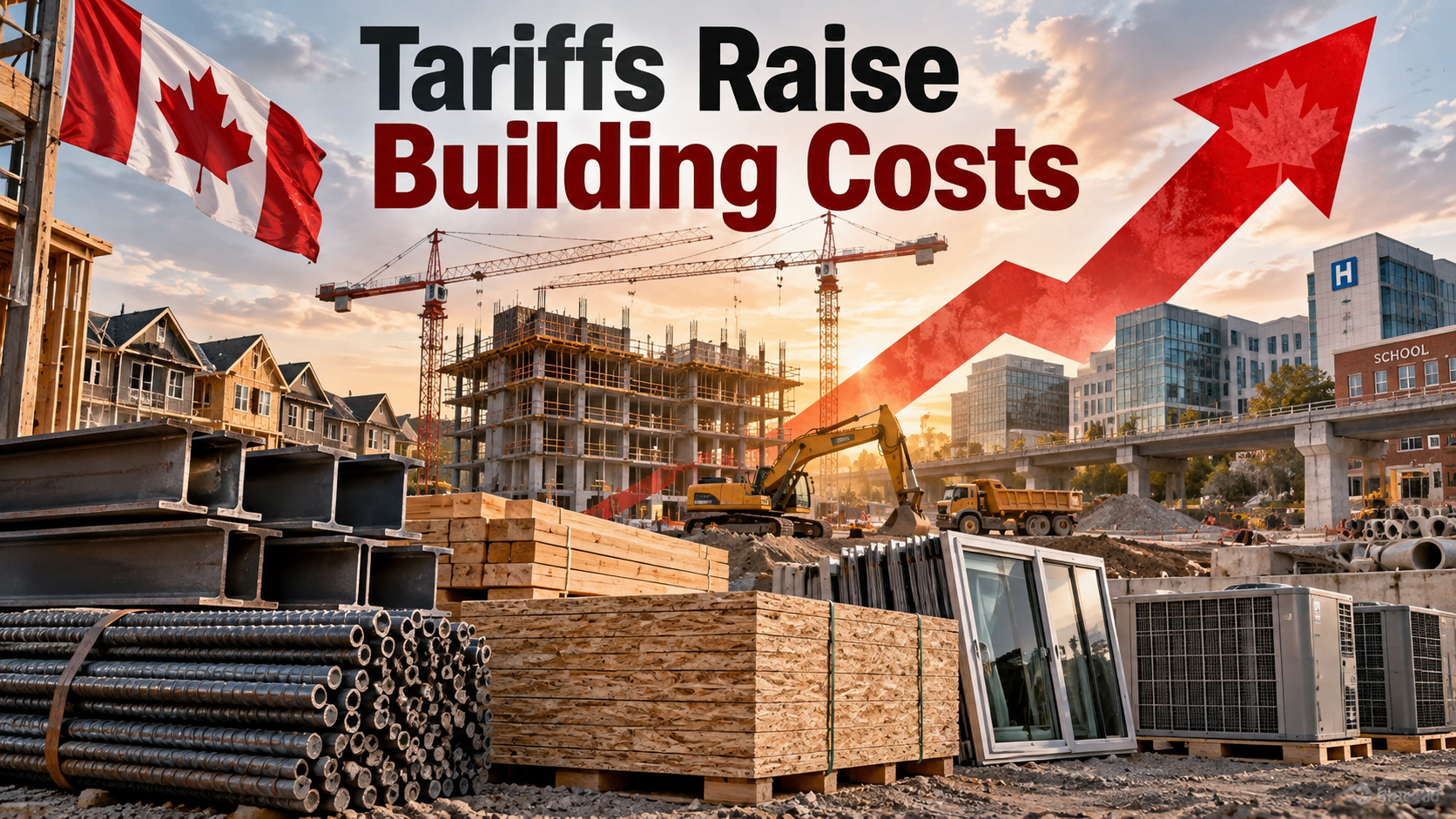
Last week, ICBA sent a letter to the federal Minister of Finance commenting on the latest suite of Canadian “counter-tariffs” imposed on approximately $28 billion of imports from the U.S., in retaliation for the Section 338 tariffs announced by President Trump earlier in the summer. We expressed concern over the large number of products and inputs used by the Canadian construction industry included in the Canadian counter-tariff list. These items are used to build homes, commercial and industrial buildings, energy and transport infrastructure, and public sector facilities (e.g., hospitals, schools, recreation centres).
Of the U.S.-made goods subject to the latest Canadian counter-tariffs, ICBA estimates that approximately 400 of the product lines are “construction-relevant,” representing some $22 billion in annual imports. The Canadian counter-tariffs levied on these U.S.-produced imports, as of September 8, 2026, amount to more than $8 billion in gross duties per year. According to the Bank of Canada, three-quarters of the cost of Canadian tariffs eventually will fall on the shoulders of domestic purchasers, assuming the tariffs remain in place for at least 18 months.
Among the imported construction-related goods on the Canadian counter-tariff list are steel and many products made of steel; aluminum and many manufactured goods in which aluminum is an important input; a mix of lumber, plywood and engineered wood products; windows and doors; HVAC and air conditioning units; cranes, hoists and lifting equipment; power tools; and many types of machinery and mechanical goods.
In our letter, ICBA recommends, inter alia, that the Minister, “to the extent possible, exempt construction materials and equipment from the September 8 schedule.” Is this simply a case of special pleading by an industry organization on behalf of its members? Not really. While removing some of the construction-relevant goods on Canada’s counter-tariff list would be welcomed by many ICBA members, there are broader economic and policy considerations that lend support to our recommendation.
Shining a Light on Escalating Construction Costs
Perhaps most important, we believe Canadian policymakers need to pay more attention to what’s been happening to building construction costs in the last 6-7 years.
Starting with residential building, Statistics Canada’s 15-city national construction price index shows an increase of more than 70% since mid-2019. As summarized in Figure 1, the increases have been even bigger in Alberta but somewhat smaller – but still significant – in British Columbia.
Figure 1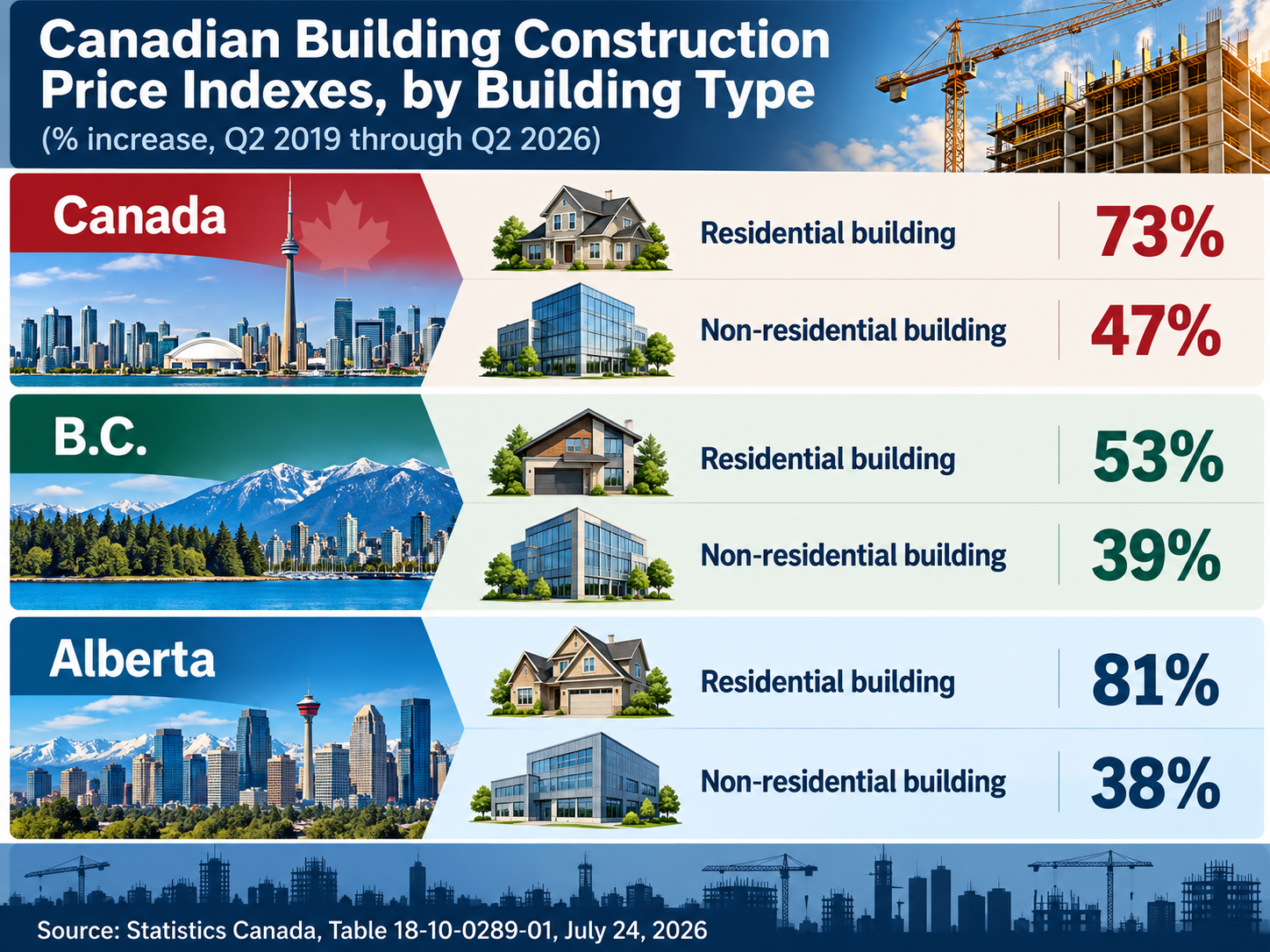
Turning to non-residential building costs, nationally the jump in building prices has been in the vicinity of 50% from the second quarter of 2019 through the second quarter of 2026. In B.C. and Alberta, the increases were just under 40% over the same period.
The building prices tracked by Statistics Canada capture the cost of labour, materials, equipment and overhead; land costs, property taxes and value-added taxes are not included in the index measure.
Viewed through the twin lenses of housing affordability and business competitiveness, steadily rising building construction costs present a worrisome trend – one that has acted as an economic headwind. Imposing additional retaliatory tariffs on billions of dollars of construction materials and inputs imported from the United States can only put further upward pressure on Canadian building costs. Even prior to the September 8 counter-tariffs, previous Canadian retaliatory measures had raised the cost of construction materials by almost 10%. That figure is set to march higher as a result of the Government of Canada’s latest retaliatory tariffs.
At a time when federal policymakers are seeking both to accelerate homebuilding and to attract up to $1 trillion in new investment to Canada within the next few years, a policy of tit-for-tat tariff retaliation stands out as being inconsistent with the Carney government’s stated economic development priorities.
Explore the rising construction costs in Canada, their impact on affordability, and potential policy solutions to ease the financial burden on...

The Carney government's export plan relies on Canada’s natural resource sector, aiming to boost exports and investment amidst U.S. trade challenges.

Despite efforts to diversify, Canada's trade dependence on the U.S. remains largely unchanged. Explore key findings and implications for businesses...