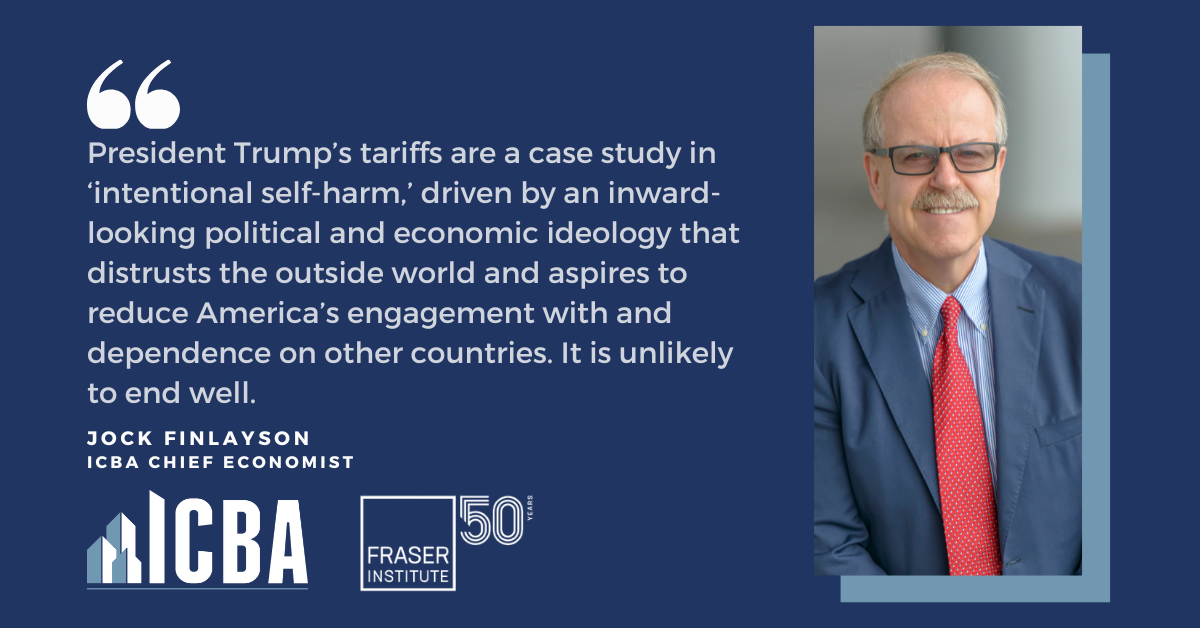
ICBA ECONOMICS: President Trump lays ruin to post-war multilateral global trading system
President Trump’s sweeping tariffs disrupt the global trading system, signaling a shift towards protectionism and de-globalization, with significant...
2 min read
It’s no secret that Donald Trump won last year’s Presidential election on the back of far-reaching promises to fundamentally change the direction and details of U.S. immigration policy. Among other things, the 47th President pledged to dramatically step up deportations of foreigners living and working the U.S. without legal authorization. He and his party also vowed to cut back on the overall intake of newcomers, including international students enrolled in American colleges and universities.
Over the first eight months of his administration, the President and his team have moved aggressively to deliver on these immigration-related commitments. Undocumented inflows along the southern border have fallen dramatically. It is now much harder for asylum seekers to file claims from within the U.S. Detentions of individuals in the United States without proper authorization have risen sharply, aided by daily high-profile “raids” conducted by Immigration and Customs Enforcement (ICE) officers. Fewer visas are being issued to foreign students wanting to study in the United States. And the number of “legal” permanent immigrants admitted is trending lower, at a time when America demonstrably has become less welcoming of immigrants in general.
Labour Market Implications and the Effects on Construction
Even before President Trump returned to office, the U.S. lagged Canada and some other developed countries in “legal” immigration measured relative to population size. Now the gap is set to widen further. With America enjoying a relatively robust economy and a relatively low unemployment rate compared to peer jurisdictions, fewer new immigrants and the departure of more foreigners in the U.S. without authorization are likely to aggravate labour shortages in some industries, push up average wages in sectors notably reliant on foreign workers, and reduce America’s “potential” economic growth rate (which, ultimately, depends on the growth of labour supply coupled with increases in labour productivity). According to a recent CIBC Economics analysis, “average annual growth in real GDP could decelerate by 0.7-0.9 percentage points” versus where it would have been based on the demographic growth trends in place prior to 2025.
It is important to recognize that a majority of the roughly 13-14 million foreigners in the U.S. without proper authorization as of 2024 were employed – either “above” ground in the formal economy, or “off the books” in the hidden economy. Of all large U.S. industries, construction is the most dependent on unauthorized immigrant workers, followed by agriculture, hospitality and leisure, and personal/community services. As of 2024, 14-15% of U.S. construction workers were unauthorized immigrants.
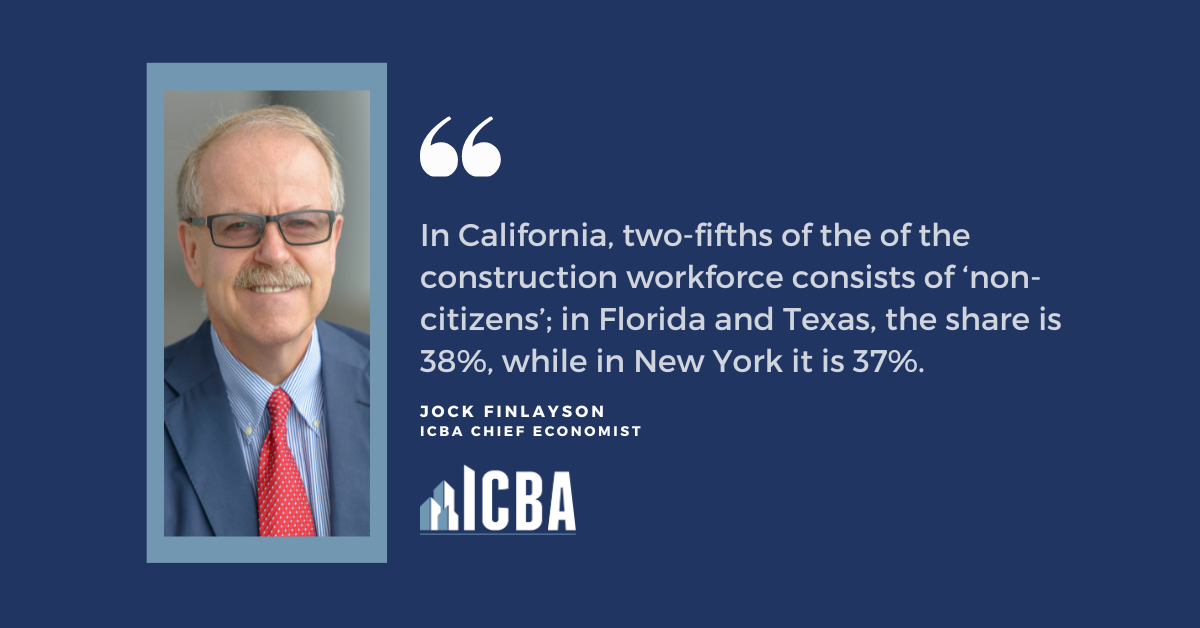
The National Association of Homebuilders estimates that one-quarter of the entire workforce in the residential building/renovation industry is foreign-born, of which a hefty chunk are unauthorized immigrants. In California, two-fifths of the of the construction workforce consists of “non-citizens”; in Florida and Texas, the share is 38%, while in New York it is 37%.
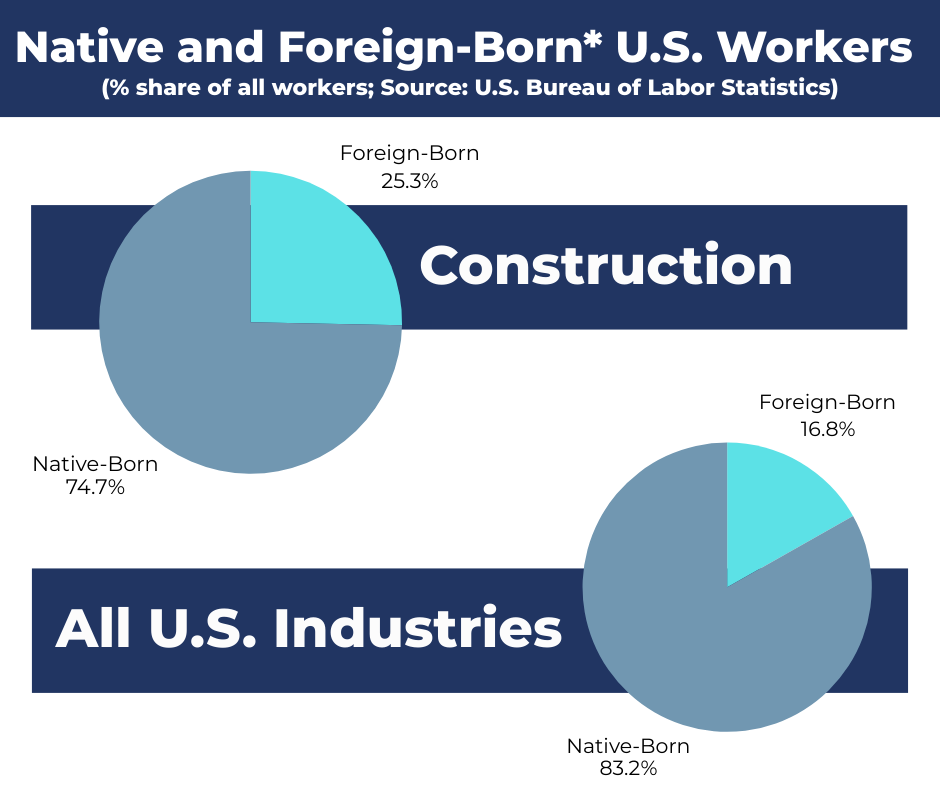
Figure 1 shows the distribution of foreign-born and native-born workers in the construction sector as well as the overall U.S. economy. Note that the estimates for the foreign-born include both legal first-generation immigrants and individuals working in the U.S. without authorization.
Figure 1
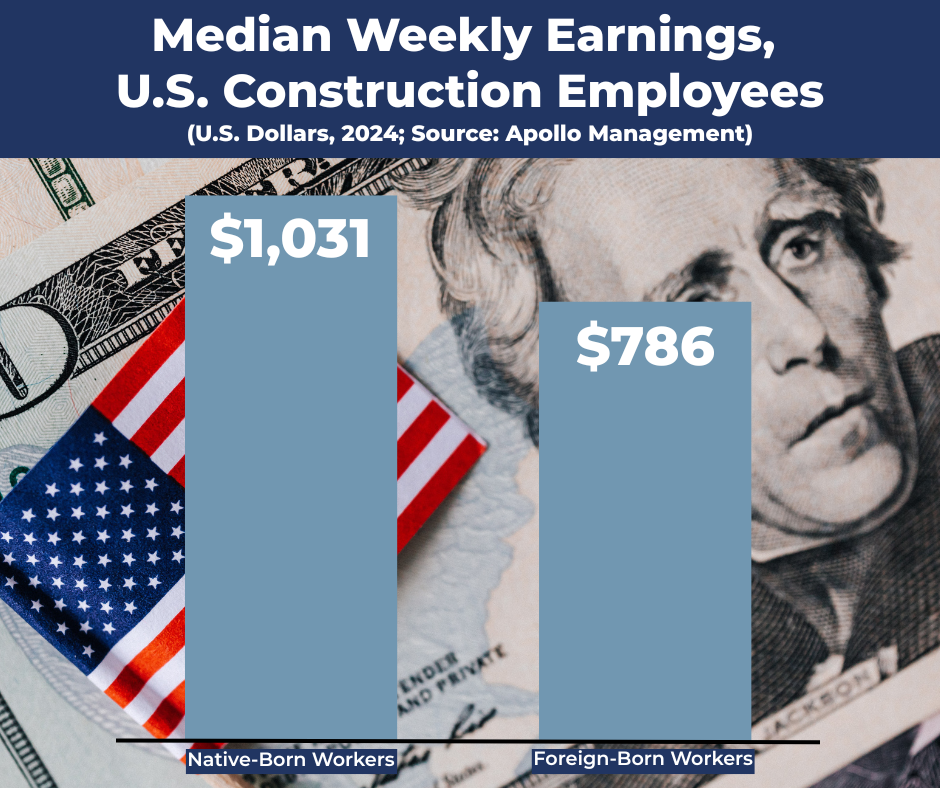
An important data point about the U.S. construction industry is that “foreign born” workers are paid less, on average, than the “native born” (Figure 2). This suggests the economic effects of reduced U.S. immigrant inflows – combined with more deportations of unauthorized workers – will be magnified in the case of construction. This is because many of both the departing and “never-arriving” foreign workers will end up being supplanted by higher-paid, native-born labourers and skilled trades workers.
Figure 2
President Trump’s sweeping tariffs disrupt the global trading system, signaling a shift towards protectionism and de-globalization, with significant...
Explore how the Canada-U.S. trade war impacts British Columbia's construction industry, with rising costs and economic uncertainty threatening growth...
British Columbia's job market struggles with rising unemployment and uneven growth, with the public sector expanding while the private sector...