1 min read
U.S. Tariffs Aren’t B.C. Forestry’s Biggest Problem
The following piece was co-authored by ICBA Chief Economist Jock Finlayson and consulting economist Ken Peacock. Subscribe to Ken's Substack HERE.
3 min read
Jock Finlayson : Updated on August 24, 2026
The following op-ed, by ICBA Chief Economist Jock Finlayson and consulting economist Ken Peacock, first appeared in Business in Vancouver on August 18, 2026.
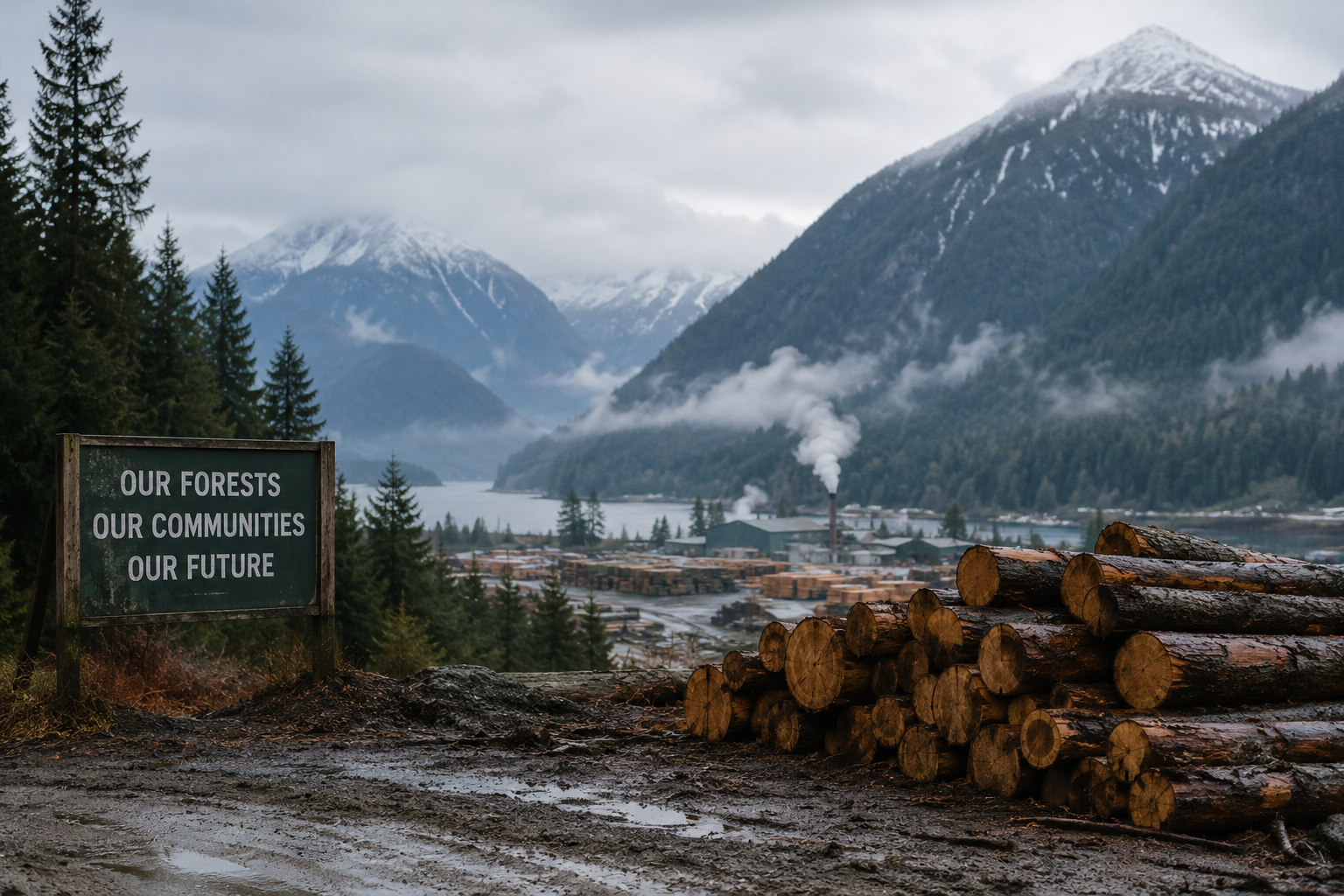
It was recently reported that Interfor, a B.C.-founded forest products company and one of North America’s largest lumber producers, is planning to relocate its head-office operations from Metro Vancouver to Georgia. A couple of weeks earlier, Canfor announced the permanent closure of its Northwood Pulp Mill in Prince George. These are only the latest in a long list of forestry operations that have closed or left British Columbia. According to the Council of Forest Industries (COFI), 23 mills have permanently closed since 2023. The latest reports suggest the count may now be approaching 30.
The David Eby government has been quick to blame the shrinking B.C. forest industry on President Trump’s tariffs. The tariffs are undoubtedly another blow. But the deeper causes of the crisis in B.C. forestry lie closer to home.
B.C. lumber production has been in steep decline for a decade or more. In the Interior, which accounts for almost 90 per cent of provincial production, output has fallen 57 per cent since 2016. On the coast, the drop amounts to 53 per cent.
On a volume basis, B.C. interior lumber production has fallen by almost 16 million cubic metres since 2016. Production has dropped by 1.6 million cubic metres since President Trump returned to office, casting doubt on claims that his tariffs are the main cause of the B.C. industry’s troubles.
That conclusion is reinforced by research by the Canadian Forest Sector Transformation Task Force, established by the federal government in late 2025 to identify actions needed to improve the long-term competitiveness of Canada’s forest products sector.
The Task Force’s final report, Canada’s Transformed Forest Sector: Competitive. Resilient. Relevant., appeared in April 2026. The second paragraph of its executive summary is blunt:
“While external pressures—most notably sustained U.S. softwood lumber duties, global market shifts, insect outbreaks, and wildland fire—have exacerbated these challenges, the Task Force’s conclusion is unequivocal: the most significant barriers to competitiveness are homegrown. These include unstable access to cost competitive fibre, regulatory burden disproportionate to risk, chronic underinvestment in manufacturing assets, weak deployment-focused innovation capacity, and inadequately developed domestic demand for wood-based products.” (emphasis in original)
The Task Force shows that the basic costs associated with accessing fibre (stumpage paid by companies to harvest timber) and sawmilling are competitive in Canada. In B.C., stumpage costs are 26 per cent lower than in the U.S. South, and sawmilling costs are 30 per cent lower.
But these advantages are overwhelmed by the higher costs of harvesting and transporting logs and a more burdensome regulatory regime, particularly in B.C.
As the Task Force observes: “It is our harvesting and transportation costs, which range from 75% to 154% greater than mills in the U.S. South, that destroy our competitiveness, leading to between 12% and 20% higher average production costs at the sawmill level, which cascade through the entire supply chain.”
With diminished and uncertain access to fibre and harvesting and transportation costs significantly higher than in the U.S. South, it is hardly surprising that B.C. forest products companies are increasingly investing in jurisdictions where they can secure long-term access to fibre at much lower cost. As the Task Force concludes:
“Stable, long-term access to cost-competitive fibre is the precondition to everything else in this report. Without it, capital will not flow regardless of incentives, transformation funds risk treating symptoms rather than causes, and workforce confidence will continue to erode.”
In B.C., where the Crown owns more than 90 per cent of the provincial land base, government plays a central role in setting the policies and regulations – the hosting conditions -- for the forest products sector. The Task Force has this to say about the province’s role:
“The harvesting and transportation costs that constrain the competitiveness of Canada’s delivered wood costs are largely policy-driven. Repeated provincial policy reforms in recent years have led to major reductions in industry access to fibre, persistent conflict over how forests are managed, and collapses in investor confidence. It is a crisis of uncertainty and unfulfilled potential in a country where over 90% of our forests are publicly owned.”
Tariffs matter. They add to the pressures facing an already weakened industry and make it harder for B.C. producers to compete in their principal export market. But they are not the primary reason B.C.’s forest sector has been gradually disappearing for the better part of a decade.
The B.C. industry’s core challenges are structural and largely domestic in origin. Fibre access has diminished, many costs have risen, and chronic policy uncertainty has undermined the confidence needed to make long-term investments in mills and communities. Unless policymakers are prepared to address these underlying problems, the recent announcements by Interfor and Canfor are unlikely to be the last.
1 min read
The following piece was co-authored by ICBA Chief Economist Jock Finlayson and consulting economist Ken Peacock. Subscribe to Ken's Substack HERE.
1 min read
The following piece, by ICBA Chief Economist Jock Finlayson and consulting economist Ken Peacock, was first published in Business in Vancouver on...
1 min read
The following piece, by ICBA Chief Economist Jock Finlayson and consulting economist Ken Peacock, was first published in the print edition of ...