3 min read

OP/ED: Replace the Taylor Bridge, B.C. Can't Afford to Wait

OP/ED: Replace the Taylor Bridge, B.C. Can't Afford to Wait
5:16

The following op-ed by ICBA President and CEO Chris Gardner first appeared on EnergeticCity.ca on March 31, 2026.

A 65-year-old steel bridge is barely holding together the Peace River corridor and economy – and it’s only getting more expensive to replace it.

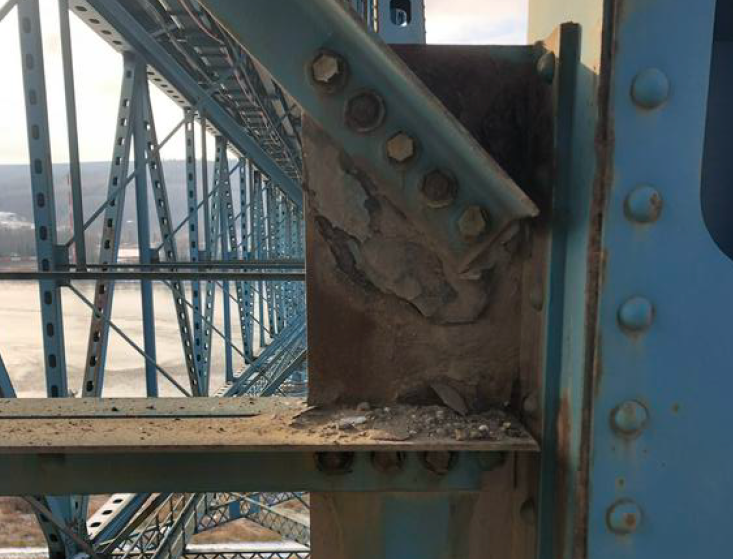
Last year, ICBA filed a Freedom of Information request for the inspection reports on the Taylor Bridge in northeast B.C. What finally came back this week, after a nine-month wait, was concerning. Cracked floor stringers that have been field-welded, re-cracked, and field-welded again. Gusset plates – the steel connection nodes that hold the entire truss together – with confirmed material loss from decades of corrosion. A coating system described by the government's own engineers as “failed and in poor condition.”

This is not just any bridge. The Taylor Bridge carries Highway 97 across the Peace River and is the backbone of northeastern B.C.'s economy. The region produces natural gas, oil, forestry products, and has some of the province's most productive agricultural land. The Site C dam isn’t far away. Every load of grain, every oversized energy sector haul, every supply truck headed to a northern community crosses this bridge. If the Taylor Bridge closes or is restricted, it turns a one-hour trip between Dawson Creek and Fort St. John into a 3+ hour trek adding 175 more kilometres.

The reports imply the government is leaning toward rehabilitation rather than replacement. ICBA believes that is the wrong call.

The concrete substructure is sound – that's not in dispute. But the steel superstructure is like a patient in active decline waiting to see a specialist. The fatigue cracks keep appearing at new locations no matter how many are drilled and welded. The coating has failed, lead-based paint is on nearly every tested surface, and the original design included no sacrificial steel allowance – meaning every millimetre of corrosion eats directly into structural margin with no buffer. The government's own engineers note the structure will need “additional steel added” just to make rehabilitation viable.

A new bridge built to modern standards would serve northern B.C. for 75 years. Every year of reactive maintenance – more stringer welds, more gusset reinforcements, more hazmat recoating – drives the rehabilitation cost higher while the service life gets shorter. The government owes the Peace region a replacement, a timeline, and a commitment.

We've seen what delaying the inevitable looks like. The George Massey Tunnel opened in Delta/Richmond in 1959, one year before the Taylor Bridge. Its replacement was designed, permitted, and ready to build in 2017 – with bids as low as $2.6 billion. One of the first decisions of a newly elected NDP government was to cancel this project. Today, nine years later, the project still doesn't have an environmental assessment certificate. The official budget is nominally $4.15 billion, a pre-pandemic estimate the government's own minister has effectively conceded is out of date – we suspect it could more than double. A crossing that could have opened in 2022 won't open until 2030 at the earliest. This has become a 30-year project defined by so many starts and stops that someone who was riding in a baby car seat when talk of replacing the Massey started will be in their 30s when they finally use the new crossing.

Budget 2026 introduced a new spin on the NDP’s approach to building infrastructure: project “re-pacing.” Finance Minister Brenda Bailey used it to explain delaying construction of long-term care facilities, hospitals, and student housing.

Here's the problem. You can only “re-pace” a project that was “paced” in the first place. The Taylor Bridge replacement has never been included in any budget. What we have is an old bridge being held together by field welds while engineers work toward “identifying a preferred course of action.”

The collapse in B.C.’s finances make it worse. Premier David Eby has presided over a shocking explosion in government spending and debt. The Ministry of Finance forecasts a structural deficit of $12-13 billion per year and $13.3 billion next year – the largest in B.C. history. Taxpayer-supported debt is heading toward 37.4 percent of GDP by 2028-29. Spending to pay the interest on all this debt is now Victoria’s third largest expenditure after health care and education. Put plainly, the cupboard is bare.

Still, ICBA's ask is simple: replace the Taylor Bridge, don’t rehabilitate it. Building infrastructure is not just another government program and delay is not fiscal prudence.

Over the past generation, Canada and B.C. have unenviable track records of dithering and delay on approving and building major projects. We need a focus on execution and delivery at a time when the strategic imperative to invest in infrastructure, capitalize on our energy and resource advantage, and get our goods to markets faster, has never been greater.

The Taylor Bridge doesn't have another decade to wait for a decision and neither do the communities in the Peace.

ICBA.CA EXCLUSIVE OP-ED: British Columbians Have Seen Enough of NDP’s Spending

ICBA.CA EXCLUSIVE OP-ED: British Columbians Have Seen Enough of NDP’s Spending

British Columbia’s provincial budget isn’t just bad. It’s historically bad on every single measure.

Read More
OP/ED: B.C.’s forestry crisis goes beyond U.S. tariffs

OP/ED: B.C.’s forestry crisis goes beyond U.S. tariffs

The following piece, by ICBA Chief Economist Jock Finlayson and consulting economist Ken Peacock, was first published in Business in Vancouver on...

Read More