ICBA ECONOMICS: Measuring the Economic Footprint of Residential Construction
Residential construction in Canada faces challenges, with significant declines in B.C. and Ontario impacting jobs and economic growth, while...
4 min read
Statistics Canada’s provincial economic accounts for 2024 provide the most comprehensive measure of economic output (GDP) across all sectors of the economy. The recently released data confirm what many have suspected: B.C.’s economy grew by a tepid 1.1 per cent in 2024 —slightly below the 1.2 per cent pace estimated by the provincial government and most private sector economists. Moreover, all indications point to an even weaker economy in 2025.
While the meagre 2024 expansion is disappointing and well below the province’s long-term average real GDP growth rate of 2.8 per cent, the composition of that feeble growth is even more troubling. The only reason B.C.’s economy grew at all in 2024 was another surge in government activity. Excluding government spending and public sector capital investment, the rest of the economy contracted by 0.4 per cent last year. The much larger and more important private sector—which accounts for three-quarters of all economic output— was actually in recession in 2024. When the numbers for 2025 are available, we are almost certain that they will show this “private sector” recession persisted.

This pattern of unbalanced economic growth was not unique to B.C.; it was also evident in Manitoba, Ontario and Nova Scotia. As in B.C., in these provinces public sector growth outpaced that in the private sector. However, B.C. stands out as the only province that experienced an outright decline in private sector output. Nationally both the public and private sectors contributed roughly one percentage point each to Canada’s 2 per cent overall growth rate, underscoring the outsized role of government across the country.

A major factor behind B.C.’s private sector recession in 2024 was the completion of several mega energy-related construction projects (Trans Mountain pipeline expansion, LNG Canada, Coastal GasLink LNG pipeline, and Site C). These unusually large projects attracted some $100 billion of capital spending over the 2016-23 period. As work on these projects has wound up, province-wide investment has fallen compared to previous levels. Last year, business investment in structures and machinery & equipment plunged 14 per cent, the steepest drop in three decades (apart from the 2008-09 global financial crisis).
However, B.C.’s economic malaise extended beyond the downturn in industrial construction. Capital investment in residential structures (new builds and alternations) fell nearly 7 per cent in 2024, the sixth decline in the past seven years. We see this pattern continuing in 2025-26. Compared with 2017, total residential investment in 2024 was 16 per cent lower. Our forecast for 2026 calls for inflation-adjusted residential investment to remain below levels reported seven years ago. The period of NDP government since mid-2017 has not been positive for residential investment spending in British Columbia.
Even more concerning is B.C.’s lacklustre export performance. The real value of the province’s international merchandise exports fell 1.3 per cent in 2024, following a flat performance the previous year. Successive declines in the value of forestry shipments, along with losses in minerals and seafood, left export volumes 8 per cent below 2017 levels. And all of this erosion occurred before the recent imposition of punitive U.S. tariffs on some Canadian-produced goods. We have no doubt that the data for 2025 will show a further sharp fall in B.C.’s real exports.
The province’s high cost of living and weak private sector job growth also weighed on household spending in 2024. Real household consumption rose just 1.1 per cent, about one-third the typical pace. With the province’s population growing by nearly 3 per cent last year, per capita consumption declined — an indication that many households are feeling squeezed and cutting back on discretionary outlays.
Looking ahead, the outlook remains subdued. U.S. tariffs will further weigh on B.C.’s already beleaguered export sector, especially forestry. So far this year, international merchandise exports have slipped through the first three quarters. Employment numbers though October also point to the continuation of a two-track economy: private sector payrolls are up just 1.1 per cent (half of last year’s increase), while public sector employment is up 1.9 per cent. Although the latter figure is lower than 2024’s blow-out 5 per cent surge, it still far exceeds job growth in the private sector.
Retail sales in 2025 have shown signs of improvement, offering a glimmer of hope that solid household consumption could help to lift private sector GDP in 2025 and perhaps beyond. But the broader economic picture remains bleak. And with the labour market softening and many B.C. households saddled with heavy debt burdens, we doubt that the recent strength in retail sales can be sustained.

The decline in private sector output is also eroding the province’s tax base and compounding the NDP government’s immense fiscal challenges – challenges which largely reflect years of runaway government spending. With B.C. now posting record deficits (the largest in the country relative to GDP) and debt levels soaring, it is no surprise that Premier Eby is eager to fast track large capital projects. While these projects, assuming they proceed, will boost growth once construction begins, the impact won’t be felt in the near-term. Even under optimistic timelines, most of the economic benefits from a hoped-for upsurge in project investment won’t materialize until 2027 and beyond. Moreover, the government’s flagship project — expanding the Northwest transmission line — is a public sector (B.C. Hydro) undertaking, and thus will not draw in private capital. Once built, the new transmission line will enable new private sector activity but in the meantime the project will add billions to the already skyrocketing public sector debt load.
It is worth remembering that during most of the post-2016 mega-project construction wave, the rest of B.C.’s private sector was expanding briskly. Those projects delivered a boost to what was an already solidly growing economy. Today, the context is very different. The private sector is struggling, and new projects will be filling a hole rather than giving a jolt to a robust B.C. private sector. The heady pace of economic growth that the province experienced during much of the 2016-2023 period is unlikely to return anytime soon.
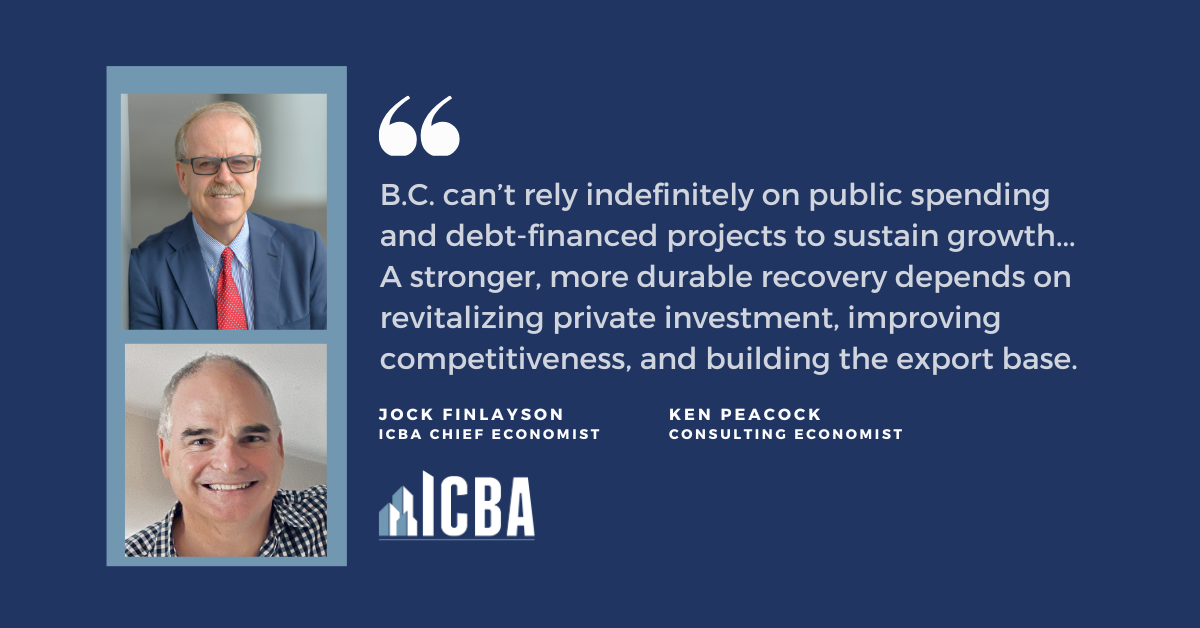
B.C.’s latest economic results should serve as a wake-up call for policymakers. The province can’t rely indefinitely on public spending and debt-financed projects to sustain growth. A stronger, more durable recovery depends on revitalizing private investment, improving competitiveness, and building the export base. Without these shifts, B.C. risks drifting into a prolonged period of very weak top-line growth, dwindling per capita incomes, and ongoing fiscal strain—a troubling prospect for what used to be one of Canada’s most dynamic provincial economies.
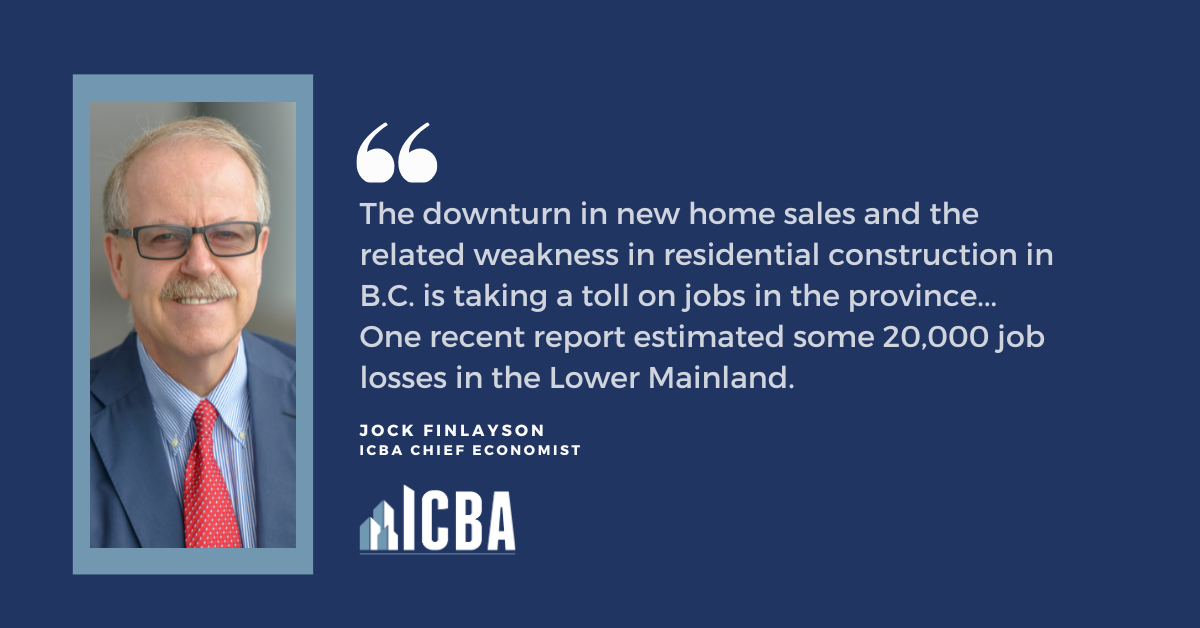
Residential construction in Canada faces challenges, with significant declines in B.C. and Ontario impacting jobs and economic growth, while...
Building permits in Canada dropped nearly 4% in November 2023, mirroring a softening economy. Alberta outperformed B.C., reflecting diverging...
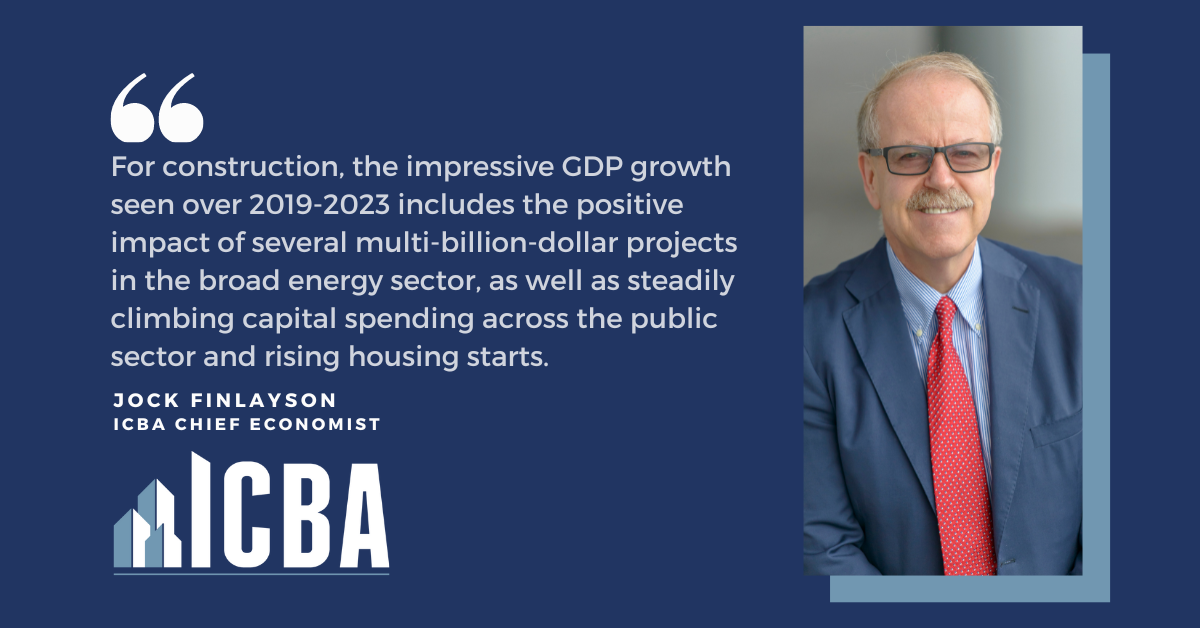
Discover which industries are driving economic growth in B.C. and how they have evolved from 2019 to 2023.