ICBA ECONOMICS: A Look Back at the Economy in 2023
A review of Canada's 2023 economy reveals strong GDP growth driven by population gains, despite declines in per capita prosperity and productivity.
1 min read
As we enter the last quarter of an economically challenging 2025, now is an opportune time to check in on recent trends in building permits.
The current dollar value of building permits issued in July was basically unchanged from the month before, which itself saw a notable decrease from May. Total permits in July 2025 reached $11.9 billion on a seasonally adjusted basis. Gains in Ontario offset declines in Quebec and most of Western Canada.
Year-to-date, Canada-wide building permits are running 8% lower than over the same period in 2024, after stripping out the effects of inflation. That speaks to a generally weak Canadian economy – and to a slowdown in homebuilding in key regional markets in Ontario and British Columbia.
Figure 1 summarizes the latest month-to-month changes across the country. Nationally, residential permits in July were up slightly from the prior month while non-residential permit values were down by 6%. Within the broad non-residential category, permits fell month-to-month in both the industrial and institutional segments but were 8% higher in the commercial segment.
Figure 1
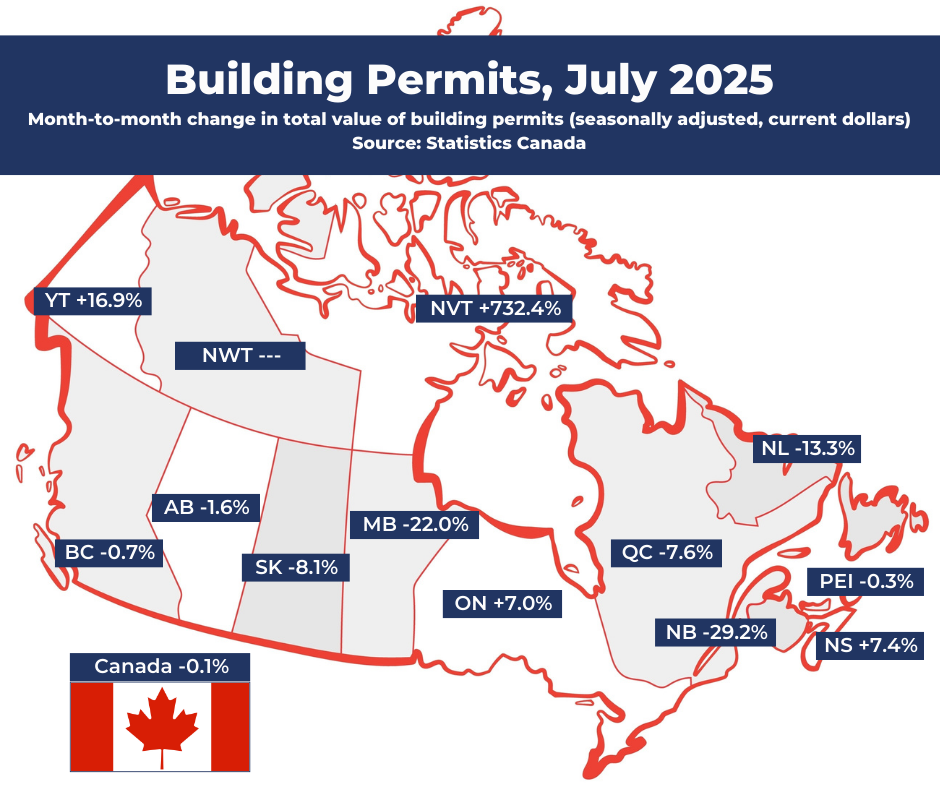
Figure 2 provides further detail on building permits in B.C. and Alberta.
Figure 2
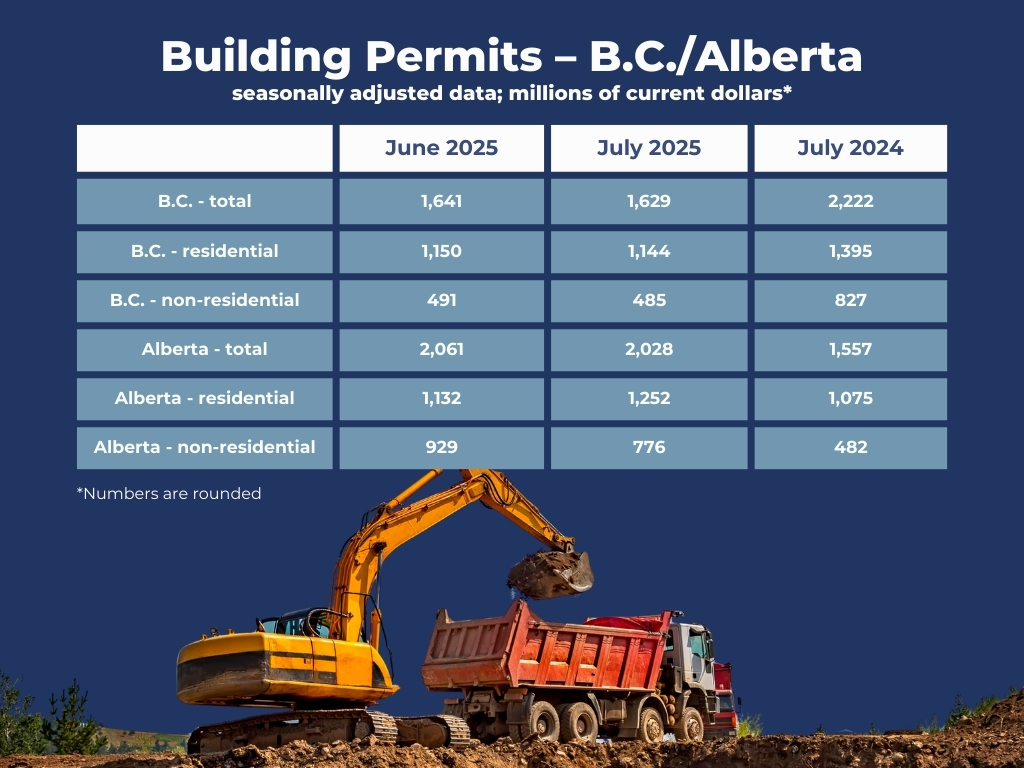
In July, B.C. experienced a small monthly drop in the overall value of permits (seasonally adjusted). However, current dollar permit values were down by a significant 27% compared to July 2024, with both residential and non-residential permits showing weakness.
Total permit values in Alberta were essentially flat on a month-to-month basis. However, compared to July 2024, permits were up 30%, with both the residential and non-residential construction sectors showing strength year over year.
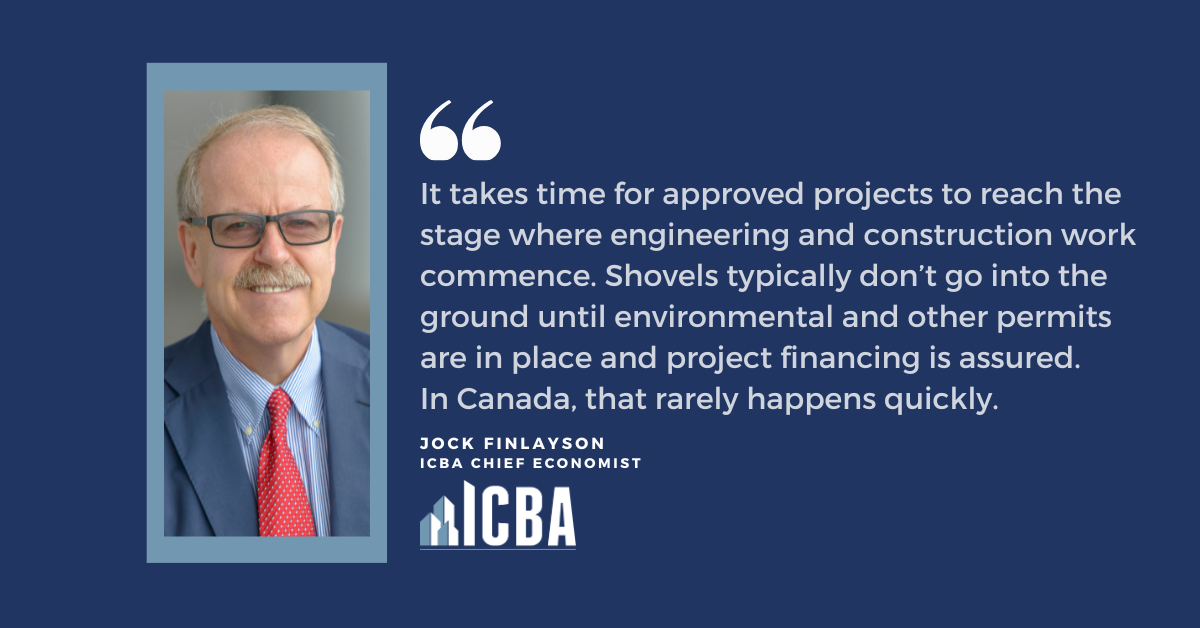
Over the balance of 2025 and into early 2026, building permits nationally are expected to feel the effects of a very sluggish Canadian economy, a weaker U.S. economy, and the damage being done by the ongoing Canada-U.S. trade conflict. Much slower Canadian population growth will also dampen planned construction spending. Robust public sector capital spending and the federal government’s determination to accelerate major project development should offer some support to building activity going forward. That said, it takes time for approved projects to reach the stage where engineering and construction work commences. Shovels typically don’t go into the ground until environmental and other permits are in place and project financing is assured. In Canada, that rarely happens quickly.
Regionally, ICBA Economics forecasts that Alberta will handily outpace B.C. in overall economic growth in 2025-26. This broader economic performance gap should be reflected in building permit data in the two provinces.
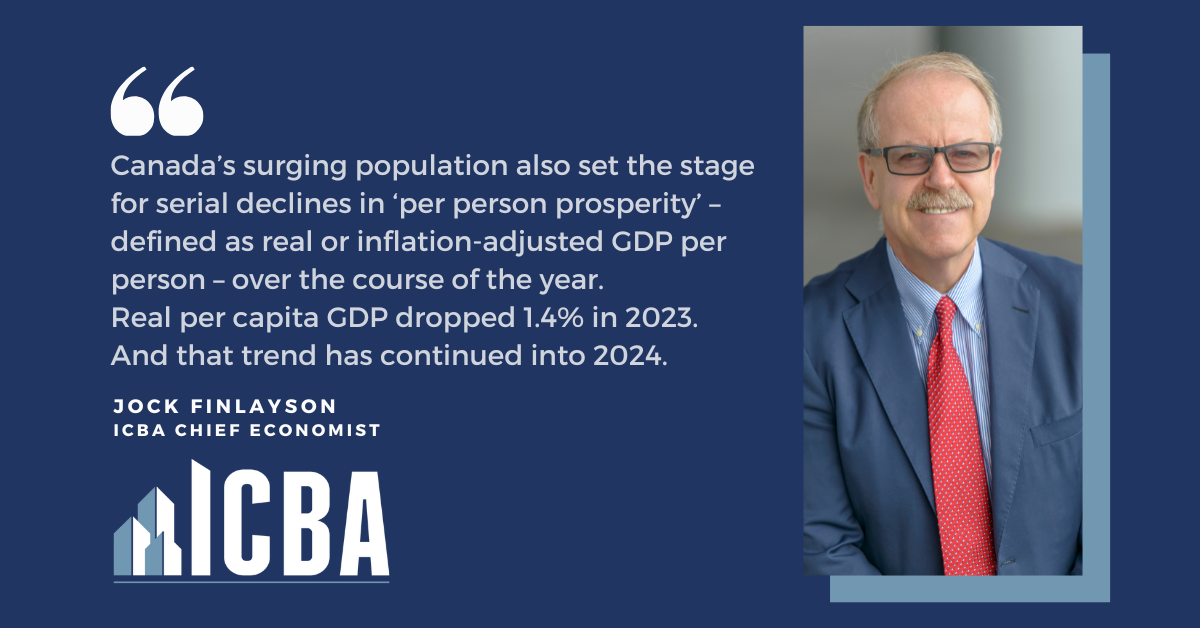
A review of Canada's 2023 economy reveals strong GDP growth driven by population gains, despite declines in per capita prosperity and productivity.
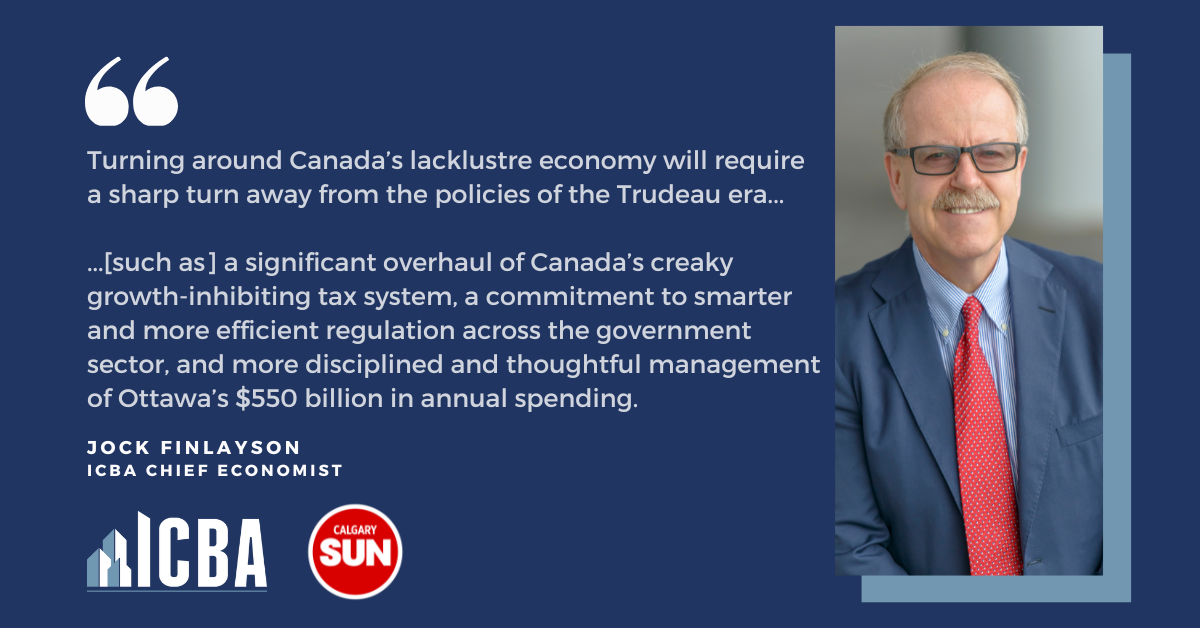
Mark Carney’s new administration must prioritize economic growth by reinvigorating business investment and improving Canada's competitiveness.
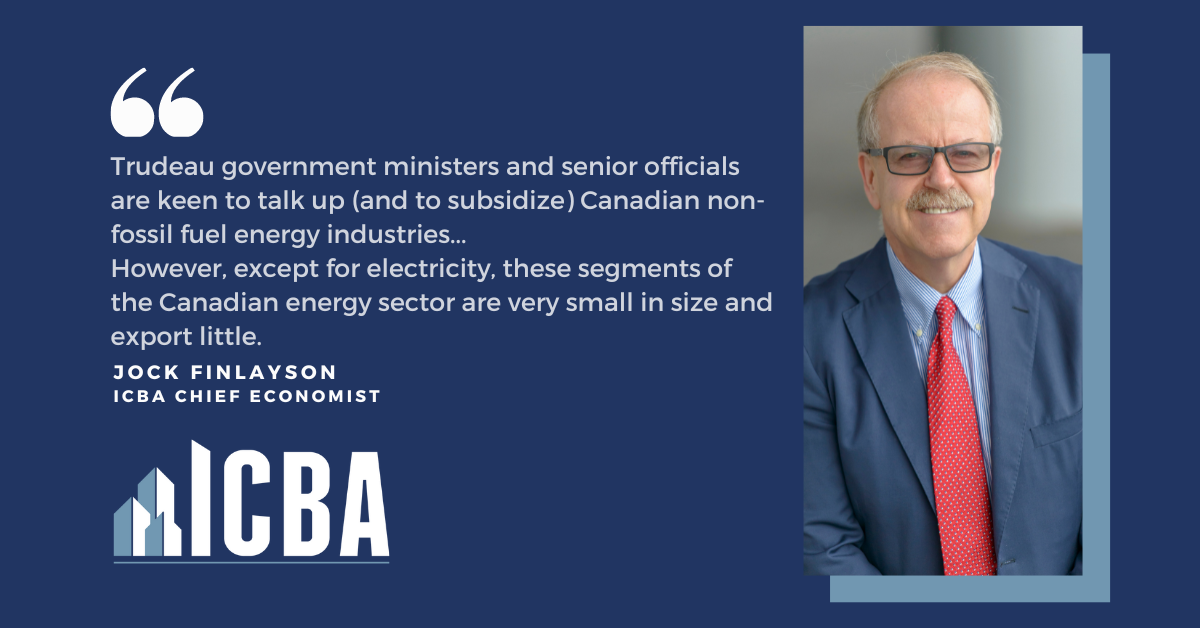
Energy remains the driving force behind Canada's exports, with oil and gas playing a crucial role in the nation's economy and trade surplus. Canada’s...