ICBA ECONOMICS: Energy – The Number One Driver of Canada’s Exports to the World
By Jock Finlayson, ICBA Chief Economist Energy sits at the heart of Canada’s export economy, even though some federal policymakers and provincial...
2 min read
Jordan Bateman : Jun 4, 2025 7:42:18 AM
The following op-ed, by ICBA Chef Economist Jock Finlayson, first appeared in the Toronto Sun on June 3, 2025.
Spend time on the websites of Canada’s leading environmental non-governmental organizations (ENGOs) and you will see repeated references to the “energy transition” — the shift away from fossil-fuel energy sources to no- and low-carbon alternatives, to help lower the greenhouse gas (GHG) emissions that lie behind concerns over climate change.
While most countries — albeit not Donald Trump’s America — notionally support the 2015 Paris Agreement goal to limit global temperature increases to between 1.5 and 2.0 degrees Celsius, few are on track to slash their emissions sufficiently to reach that target. Indeed, emissions are still climbing, mainly due to the ravenous appetite for energy in many emerging economies.
Notwithstanding decades of climate change conferences, humanity remains firmly wedded to fossil fuels, which currently supply about four-fifths of global primary energy demand — a share that has fallen only slightly since the late-1990s. Moreover, as Canadian energy scholar Vaclav Smil recently noted, the absolute quantity of fossil fuels consumed by the world has risen by more than half since 1997.
Stupendous amounts of energy are needed to provide electric power, for heating and cooling, transportation and agriculture, and to support many industrial processes. Today, fossil fuels are ubiquitous in all these areas. Only in the case of electricity have we observed a quantitatively significant move away from fossil fuel energy.
A glance at recent energy supply/demand projections highlights the dominant role of fossil fuels in the world’s energy system. The latest global outlook from multinational giant Shell is a good example.
According to Shell’s 2025 baseline forecast, worldwide demand for energy “will continue to increase as the global population grows and living standards rise.” By 2050, energy demand “could be nearly a quarter higher than in 2024 depending on economic growth rates, energy efficiency gains and the pace of electrification.”
Global oil demand is expected to grow by another 3-5 million barrels per day into the mid-2030s, confounding earlier forecasts of imminent “peak oil” consumption. Shell notes that “petroleum fuels remain affordable and convenient in transport, particularly in long-distance haulage, aviation and marine.” Oil also remains crucial to the petrochemicals sector.
Meanwhile, natural gas use is set to increase into the 2040s at least, with liquefied natural gas (LNG) representing a steadily rising share of the total natural gas market. Natural gas is a principal source of “industrial heat, fuel for power generation and heat for buildings.” It’s also critical to “helping the world move away from coal.”
Significant investments in oil and gas exploration, production, infrastructure and downstream processing “will be required for decades to come.” So much for the argument of Canadian environmental activists that it’s time to starve the oil and gas business of capital.
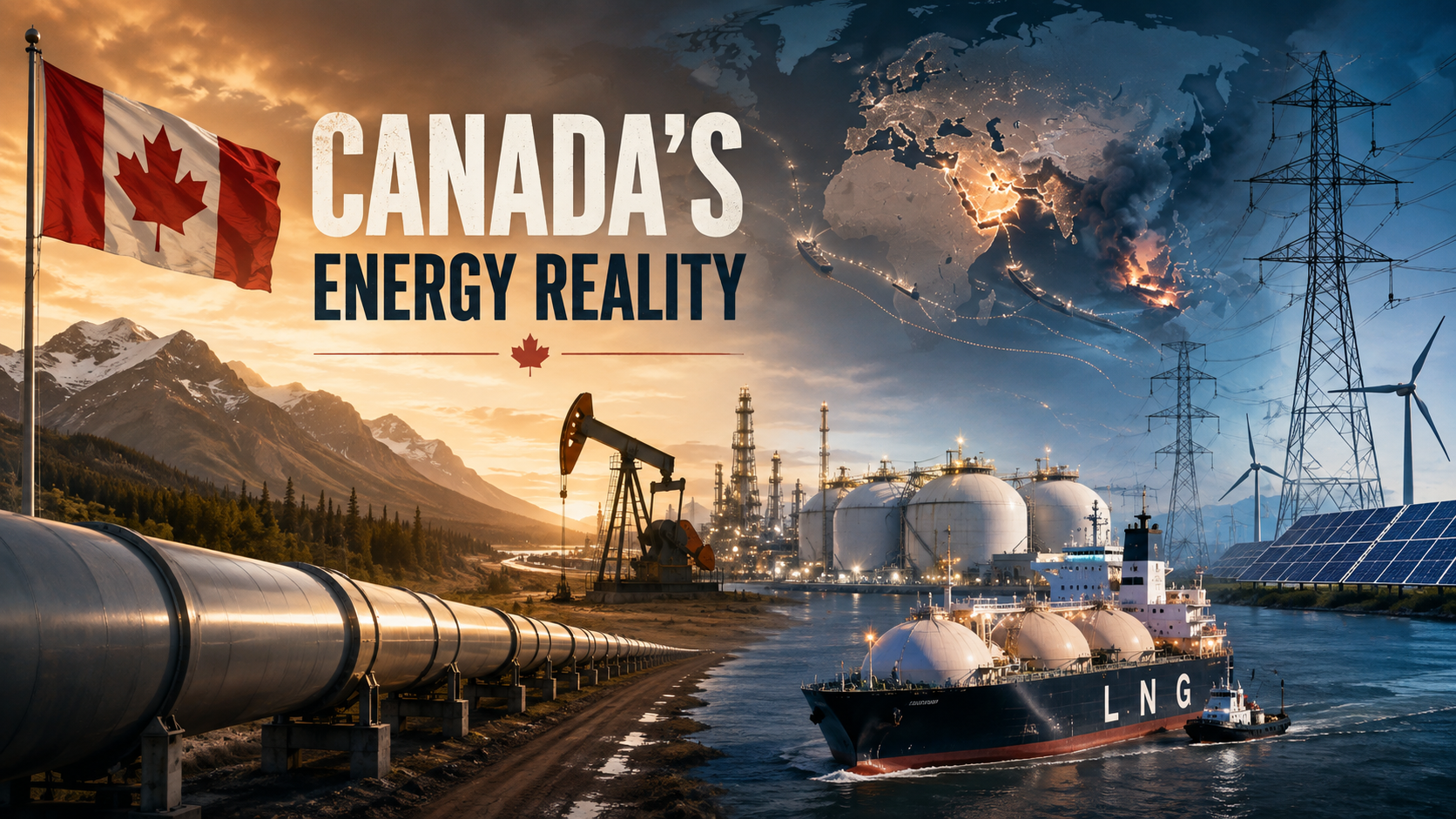
We are endowed with an almost unmatched abundance of energy riches, notably the world’s third-largest oil reserves and vast amounts of natural gas. Canada is also a global leader in producing electricity from carbon-free sources. And energy plays an outsized role in our economy, directly accounting for one-tenth of GDP and supplying roughly a quarter of the country’s merchandise exports.
As a major energy producer, Canada has well-respected environmental standards and rigorous project approval and permitting processes. These are a long-term competitive advantage.
Even as efforts continue to reduce the carbon intensity of energy use and expand renewable power capacity, a growing world will need prodigious quantities of energy including oil and gas. Canada is well-placed to help meet it.
By Jock Finlayson, ICBA Chief Economist Energy sits at the heart of Canada’s export economy, even though some federal policymakers and provincial...
The following piece, by ICBA Chief Economist Jock Finlayson, first ran in the Calgary Sun on Wednesday, May 7, 2025.
By Jock Finlayson, ICBA Chief Economist The trade union movement in Canada, as in many other advanced economies, is in the throes of change. Rapid...