ICBA ECONOMICS: The Industrial Composition of the B.C. Economy
Explore the diverse industrial landscape of British Columbia's economy and understand its evolution through the NAICS framework. Learn about key...
3 min read

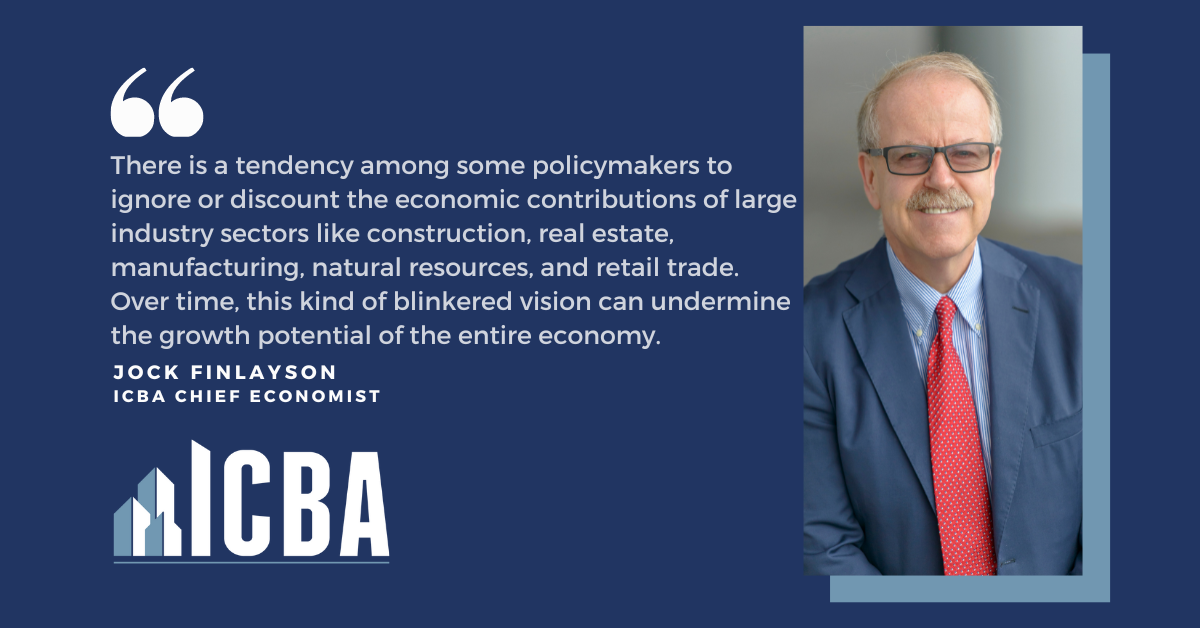
If one listens closely to what provincial government ministers and many other politicians have to say about the place of business in British Columbia, they often seem to harbour a distorted understanding of the true situation. Particularly in the case of left-leaning and other “progressive” politicians, there is a tendency to view business through a lens that emphasizes the size and power of the biggest and most visible enterprises – e.g., a handful of U.S.-based multinational tech giants, the companies that dominate Canada’s oligopolistic banking, telecommunications, and airline industries, national grocery chains, and the biggest forest and mining companies operating in B.C. To be sure, these kinds of very large firms are part of what makes up the wider “business community” in our province. But they are far from being the whole story.
To get a clearer idea of the nature of business and industry in British Columbia, it is helpful to consult the “small business profiles” produced by the provincial government. These annual reports provide a more detailed look at the composition of the business sector.
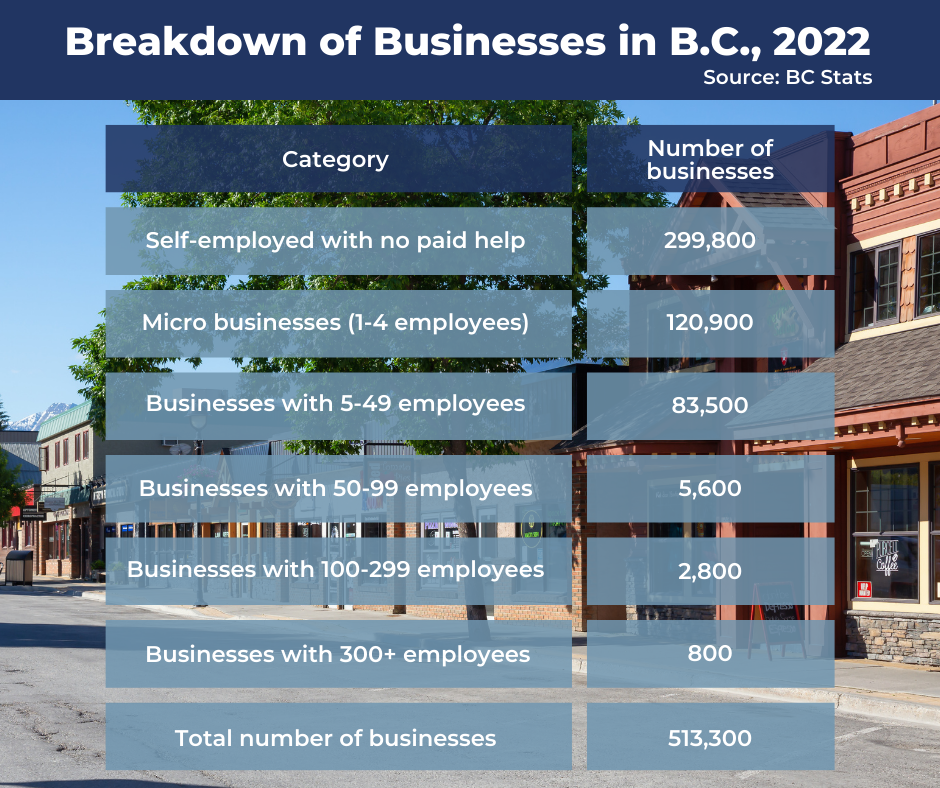
The profile starts by counting every business based and registered in the province, no matter how small, including many that consist of an individual sole proprietor but no other paid employees. The most recent report was published last fall and includes data up to the end of 2022. It mainly focuses on “small” businesses – defined as those with fewer than 50 employees. But it also contains data on mid-sized and larger enterprises based in B.C.
What does the profile tell us? Figure 1 offers a high-level overview. Briefly stated, drawing on the data in Figure 1, we can make the following observations about the B.C. business community.
Figure 1
Digging deeper into the latest report reveals additional information about B.C. businesses in general, and “small businesses” (those with between 0 and 49 employees) in particular.
Like other industries, the B.C. construction sector predominantly consist of smallish business, including sizable numbers of sole proprietors. In 2022, the construction sector had roughly 67,100 businesses with fewer than 50 paid employees, representing 13.3% of all small businesses in the province. Only the professional, scientific and technical services sector is home to more small businesses.
What this means is that the overwhelming majority of construction businesses in B.C. are either one-person operations or employ fewer than 20 paid staff, measured on a full-time equivalent basis.
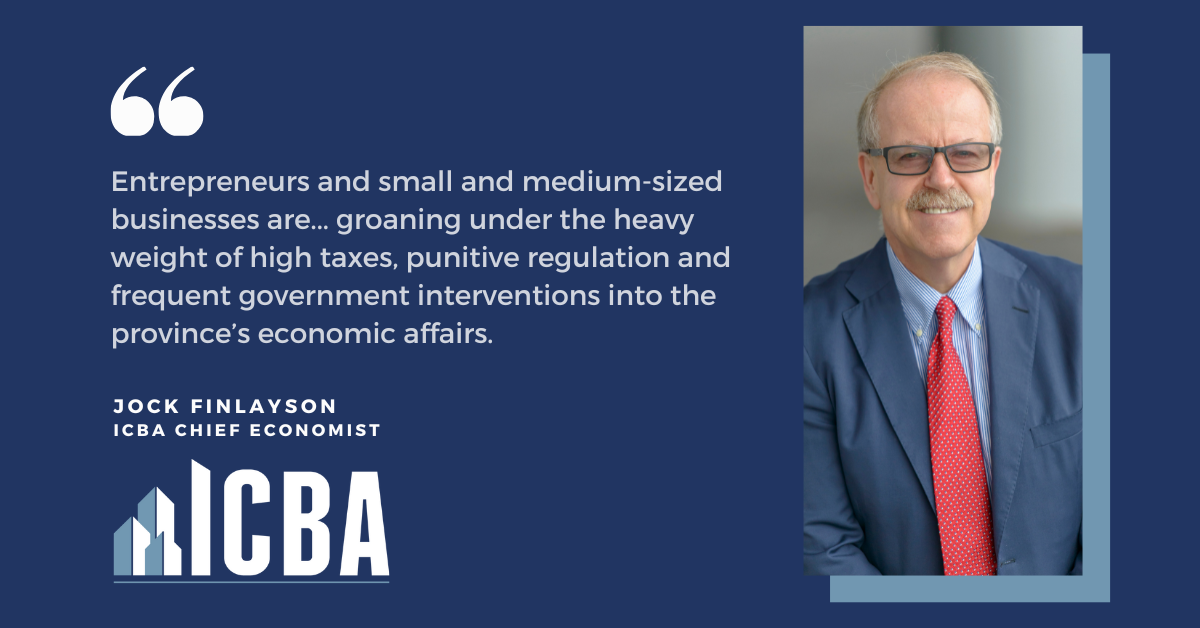
The implications for policymakers are clear. The typical business operating in British Columbia is not some giant global or national enterprise with a head office in another jurisdiction. Instead, it is a business that was founded by local entrepreneurs and has between 0 and 19 local employees. These smallish businesses are not well-equipped to withstand the higher taxes and ever-rising fees levied by various levels of government on the business sector. Nor do they find it easy to navigate the thicket of increasingly complex regulations, rules and bureaucratic processes that are designed and implemented by government ministries, agencies and administrative bodies like WorkSafeBC.
It would be helpful if government officials and elected representatives had a better understanding of the realities of doing business. Equipped with such knowledge and perspective, they would be more likely to arrive at decisions that support the goal of a thriving private sector economy instead of making it progressively harder to run a successful business in B.C.
Explore the diverse industrial landscape of British Columbia's economy and understand its evolution through the NAICS framework. Learn about key...
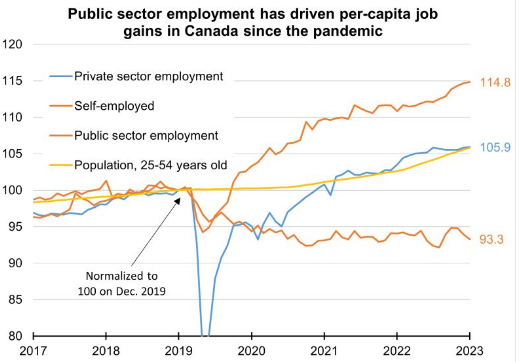
Analyzing B.C.'s 2023 job market: gains in public sector employment contrast with private sector struggles, highlighting the need for improved...
ICBA ECONOMICS: Some Priorities for the New B.C. Cabinet