5 min read

The Trade War Lands on Job Sites (ICBA Advocacy Update)

The Trade War Lands on Job Sites (ICBA Advocacy Update)

KEY POINTS

  • No deal, two tariff walls: Talks collapsed August 21. Washington's 50% tariffs on $27.6 billion of Canadian goods – cement, plywood, doors, furniture – took effect August 22. Ottawa fires back September 8, dollar for dollar.

  • The list is in: The counter-tariff list puts every form of raw U.S. steel and aluminum at 50%. Roughly 400 lines land on a construction site: lumber, plywood, LVL, flooring, door hardware, light fixtures, radiators, building wire, appliances, cranes, forklifts, power tools and trailers.

  • Retaliation is a tax on Canadian builders: ICBA Chief Economist Jock Finlayson warned Ottawa that counter-tariffs “will lead to higher costs for our firms and consumers” without moving Trump an inch. 

THE TRADE WAR IS HERE

Late August 21, the Canada-U.S. trade talks collapsed. On Saturday, 50 per cent American tariffs hit $27.6 billion of Canadian exports – a list that includes cement, wood products, and furniture. The earlier U.S. tariffs on Canadian steel, aluminum, lumber and autos stayed too. On Monday, President Trump threatened to double tariffs on Canadian autos and parts to 50 per cent on January 1.

Today, Canadian Finance Minister François-Philippe Champagne said the U.S. “asked too much and offered too little” and answered: 15, 25 and 50 per cent counter-tariffs on $27.6 billion of U.S. goods coming into Canada, each matched to the U.S. rate on the same item, starting 12:01 a.m. September 8.

JOCK: RETALIATION IS A TAX ON US

Jock Finlayson saw this coming. Writing with Steven Globerman for the Fraser Institute the day before Ottawa’s announcement, he urged the Carney government to “guard against the reflexive impulse to retaliate.” Canada is a small, open economy next to a giant one. “Canadian retaliation will lead to higher costs for our firms and consumers, put additional strain on integrated North American supply chains, and slow overall economic growth on our side of the border.”

Earlier this month, Jock showed why Canadian construction costs have run so far ahead of American ones – residential building prices up more than two-thirds since 2019 – and named “cost-inflating Canadian tariffs” as one of the culprits. His first fix was to cut tariffs on construction inputs, not add them: “For a mid-sized economy like Canada, tariffs effectively operate as a ‘tax’ on Canadian firms and households.”

ICBA has been pressing Ottawa for years for relief from its steel tariffs – at minimum a regional exemption for B.C. and Alberta. Ottawa just went the other way. The 25 per cent counter-tariff on U.S. steel and aluminum doubles to 50. 

THE LIST: STEEL AND ALUMINUM AT 50%

If it’s steel and it’s made in the U.S., it’s on the list. Hot- and cold-rolled sheet and plate. Galvanized and pre-painted coil. Rebar and wire rod. Angles, channels, I-beams and H-beams. Stainless and alloy grades. Steel wire.

Then the fabricated goods: sheet piling, seamless and welded pipe, square and rectangular tube, every pipe fitting and flange, steel doors and window frames, bridge sections, towers, and scaffolding, shoring and formwork equipment (tariff code 7308.40). Tanks and pressure vessels. Wire rope and slings. Fencing, welded mesh and expanded metal. Chain. And every nail, screw, bolt, nut, rivet, washer and anchor (7317–7318).

Aluminum gets the same treatment: ingot, bar, rod and extrusions, sheet, plate and foil, tube, pipe and fittings, wire and cable, aluminum doors, windows, frames and structural parts (7610), and aluminum fasteners. Glazing, cladding and railing contractors who source U.S. extrusions should call their supplier this week.  

THE LIST: WOOD, FIXTURES, ELECTRICAL

U.S. softwood lumber – pine, fir, spruce, SPF and hem-fir (4407) – at 25 per cent. Plywood, laminated veneer lumber (LVL) and blockboard (4412) at 50 per cent. Most B.C. framing lumber is homegrown, but LVL and specialty plywood often come north. OSB, MDF, particleboard and I-joists are not on the list.

Then the finishing package:

    • Vinyl flooring and wall coverings (3918): 50 per cent
    • Carpet, carpet tile and turf (5701–5705): mostly 25 per cent
    • Hinges, door hardware and exit devices (8302): 25 per cent
    • Stainless sinks, steel tubs and sanitary ware (7324): 25 per cent
    • LED, ceiling and wall light fixtures and parts (9405): 50 per cent
    • Radiators, unit heaters and air curtains (7322): 25 per cent
    • Gas, oil and wood stoves and heaters (7321): 25 per cent
    • Building wire and low-voltage conductors (8544.49): 25 per cent
    • Window, wall and split air conditioners and heat pumps (8415.10, .81, .82): 15 per cent; other AC units 25 per cent
    • Blowers and compressors (8414.80): 25 per cent
    • Fridges, freezers, washers, dryers, ranges and dishwasher parts: 25 per cent.
    • Metal, wood and plastic furniture: 25 to 50 per cent  

THE LIST: TOOLS, EQUIPMENT

There’s more bad news:

  • Power saws and other electric hand tools, and chainsaws (8467): 25 per cent

  • Staple guns, tackers and other hand tools (8205.59): 50 per cent
  • Vices and clamps, pipe cutters and bolt croppers: 25 per cent
  • Tower cranes and other cranes (8426): 25 per cent
  • Forklifts (8427): 15 per cent
  • Hoists, lifts and lifting gear and parts: 15 to 25 per cent
  • Hydraulic jacks: 25 per cent
  • Freight and flatbed trailers and semi-trailers (8716.39): 25 per cent
  • Excavators, loaders and dozers themselves are not listed. Their buckets, blades and other parts (8431) are, at 15 per cent
  • Drilling-rig parts: 25 per cent

For Alberta members and B.C. contractors working the gas fields: line pipe, casing, tubing and drill pipe for oil and gas (7304–7306) and wellhead forgings are all in at 50 per cent.  

THE FINE PRINT

The counter-tariffs hit only goods that count as U.S.-origin. A product made in Mexico or overseas and shipped through a U.S. warehouse is not caught – but you need the paperwork to prove it. Goods already in transit at 12:01 a.m. September 8 are exempt. CBSA will post the details in a Customs Notice.

Finance says the remission framework “remains available to assess requests for exceptional relief.”

Translation: relief goes only where no Canadian or non-U.S. supply exists, and it has been slow. Don’t count on it to rescue a bid.

Ottawa also announced a $7.5 billion support package: $1.5 billion through the Regional Tariff Response Initiative for small and medium firms, a $500 million BDC lending stream, $2 billion for a new Canada Strong Diversification Fund and $3.5 billion in worker and employer supports. We’ll share the application details as they roll out. 

WHAT TO DO ASAP

  • List every U.S.-sourced steel, aluminum, fastener, pipe, fixture and tool purchase in your pipeline. Pull the HS codes on your top 20 inputs so you know your exposure instead of guessing.

  • Ask suppliers for country-of-origin proof. “Shipped from the U.S.” is not the same as “made in the U.S.”

  • Find out where each order will be on September 8. In transit means exempt.

  • Reprice everything that crosses the border and shorten your quote life.

  • Re-read the tariff, change-in-law and price-escalation clauses in every fixed-price contract. If you don't have one, add one before you sign the next job. 

IT'S NOT ALL TRUMP

The Eby government blames tariffs for everything. Jock and consulting economist Ken Peacock took that apart in Business in Vancouver. Interfor is moving its head office to Georgia. Canfor closed Northwood Pulp. COFI counts 23 mills gone since 2023. Interior lumber production is down 57 per cent since 2016. Ottawa’s own Forest Sector Transformation Task Force put it in bold: “the most significant barriers to competitiveness are homegrown”

Then there's the provincial budget. Finance Minister Brenda Bailey closed 2025-26 with a $7.7 billion deficit – the largest in B.C. history – and called it progress. How? One-time tobacco settlement money, and $4 billion in hospitals, roads and other infrastructure that didn’t get built. A quarter of the capital plan postponed, and the minister calls it “slippage.” Contractors call it delayed tenders. This year’s deficit is budgeted at $13.3 billion. 

ICYMI

  • B.C. and Alberta together have roughly $650 billion in major project proposals on the books; Alberta alone has $80 billion under construction. Jock says the official BuildForce forecast has underestimated what that means: “We would not be surprised if actual shortfalls in the construction workforce… were 3-4 times greater than the smallish estimates BuildForce has published.”

  • The B.C. Cabinet approved FortisBC's $2 billion Tilbury LNG expansion – about 1,100 construction jobs – and a sitting minister went public against it days later. Our op-ed: pick a side, Minister.

  • Vancouver’s hijacked public hearing: California callers, AI-written scripts, and real families waiting until 1 a.m. Coffee & Construction #12 has the story.

  • ICBA’s Coffee & Construction podcast: Ten minutes, three times a week. Start with C&C #23: The Trade War Is Here. Subscribe on YouTube (@ICBATV), and get the ICBA Economics briefing in your inbox.  


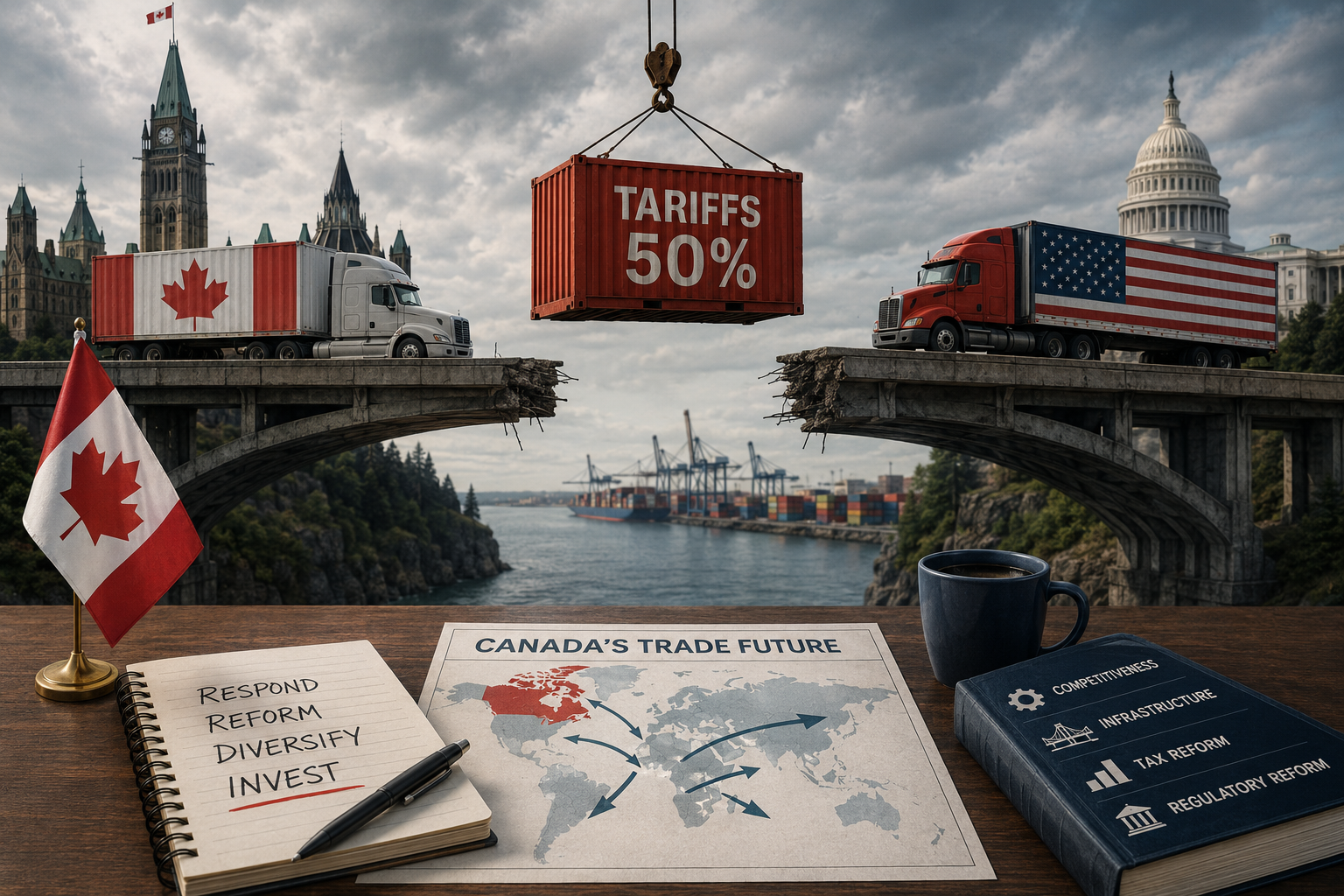
OP/ED: Here’s how Canadian policymakers should respond to Trump’s tariffs

1 min read

OP/ED: Here’s how Canadian policymakers should respond to Trump’s tariffs

The following op-ed, co-written by ICBA Chief Economist Jock Finlayson and Steven Globerman, was released by the Fraser Institute on August 24, 2026.
Read More
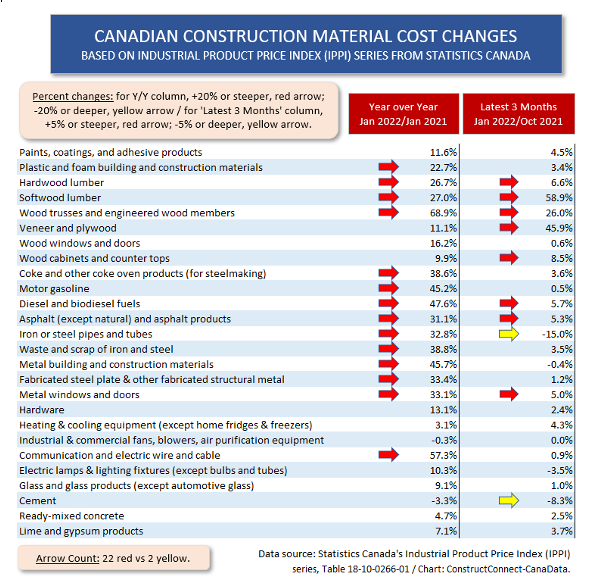
BRIEFING: Canadian Construction Material Costs Soar; and then there’s the Price of Oil

1 min read

BRIEFING: Canadian Construction Material Costs Soar; and then there’s the Price of Oil

The following is a ConstructConnect briefing on Canadian construction material cost inflation, by economist Alex Carrick.
Read More
ICBA to Ottawa: New Federal Trades Money Must Reach the Whole Industry

1 min read

ICBA to Ottawa: New Federal Trades Money Must Reach the Whole Industry

SURREY – The Independent Contractors and Businesses Association (ICBA), Canada's largest construction association, is welcoming the federal Spring...

Read More