1 min read

B.C.’s Economy Stuck as Housing Starts Fall Off a Cliff

B.C.’s Economy Stuck as Housing Starts Fall Off a Cliff
2:36

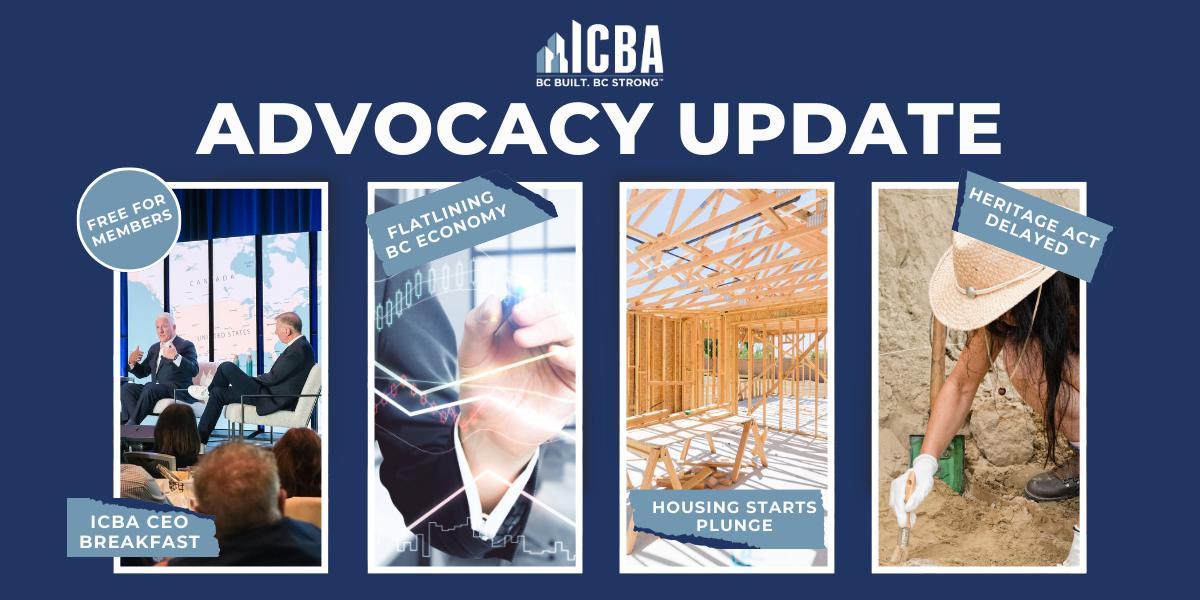
SURREY – British Columbia is staring down another difficult year, with ICBA forecasting real GDP will expand by a meagre 1.1% in 2026 – a level that signals an anemic economy and more financial and business pressure on contractors looking for work.

The warning comes in the newly released B.C. Construction Monitor, an ICBA publication that pairs analysis by ICBA Chief Economist Jock Finlayson with key economic statistics and indicators across the construction sector.

“A 1.1% economy isn’t real growth or even a recovery – it’s essentially a flatline,” said Chris Gardner, President and CEO of the Independent Contractors and Businesses Association (ICBA). “When growth stalls, it means fewer projects, job losses, slower investment decisions, and more uncertainty – that’s exactly what this forecast is telling contractors and other B.C. business owners to prepare for in 2026.”

A second red flag in ICBA’s B.C. forecast is housing. Housing starts are projected to fall sharply from 42,200 to 34,500 in 2026 – a steep decline from last year and a far cry from the high-water mark of 50,500 in 2023. This confirms what ICBA, homebuilders and industry experts have been saying for many years – the vast majority of housing programs coming out of Victoria, and from most City Halls, are misdirected and are not working. This will ripple across the residential construction sector and reflects the rapidly deteriorating economics surrounding private sector homebuilding in the Lower Mainland and some other B.C. regions.

“When housing starts fall off a cliff, it’s not just numbers on a piece of paper – it’s businesses closing and families hit hard by layoffs,” Gardner said. “Construction is one of B.C.’s biggest employers, and when projects stall or get cancelled, it means apprentices who never get placed and skilled trades workers whose careers get derailed and who are forced to look for other opportunities or leave the province.”

ICBA says governments at every level need to stop driving up the “cost of delivery” with constantly changing rules, codes and permitting delays that make residential projects unviable.

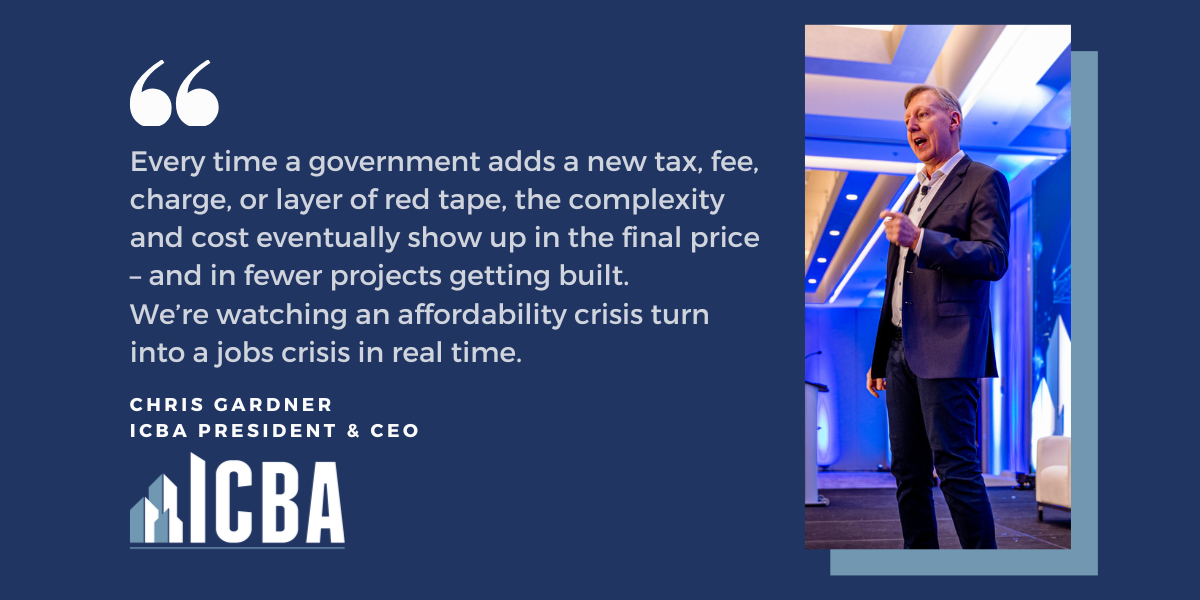
“Every time a government adds a new tax, fee, charge, or layer of red tape, or changes codes, the complexity and cost eventually show up in the final price – and in fewer projects getting built,” Gardner said. “We’re watching an affordability crisis turn into a jobs crisis in real time.”

The full Construction Monitor report is available HERE.

NEWS RELEASE: Contractors Now Scrambling for Work, Not Workers

NEWS RELEASE: Contractors Now Scrambling for Work, Not Workers

SURREY– B.C.’s construction market has turned a dangerous corner, with contractors now more worried about finding work than finding workers,...

Read More
1.1% “Flatline” Forecast: What It Means for Construction (and What ICBA is Doing)

1 min read

1.1% “Flatline” Forecast: What It Means for Construction (and What ICBA is Doing)

KEY POINTS B.C. is flatlining: ICBA’s Construction Monitor forecasts just 1.1% GDP growth in 2026. Housing starts are projected to drop 42,200 →...

Read More
CONSTRUCTION MONITOR (SUMMER 2022): Building Barriers to the Future of Trades

CONSTRUCTION MONITOR (SUMMER 2022): Building Barriers to the Future of Trades

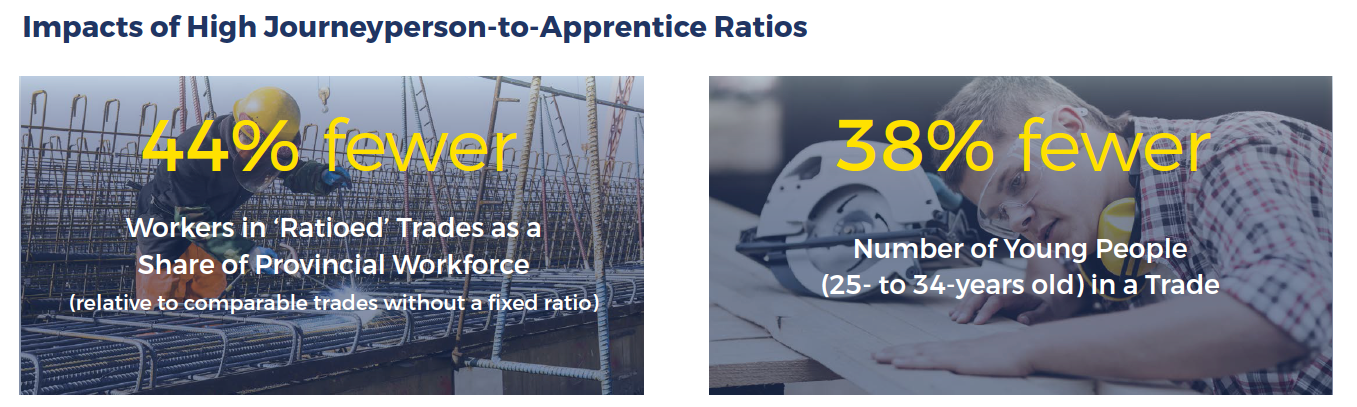
The Summer 2022 edition of The Construction Monitor looks at the BC NDP Government's new compulsory trades laws. See the full Monitor HERE.

Read More